
Blog
How to Find Authentic Taverns in Marbella

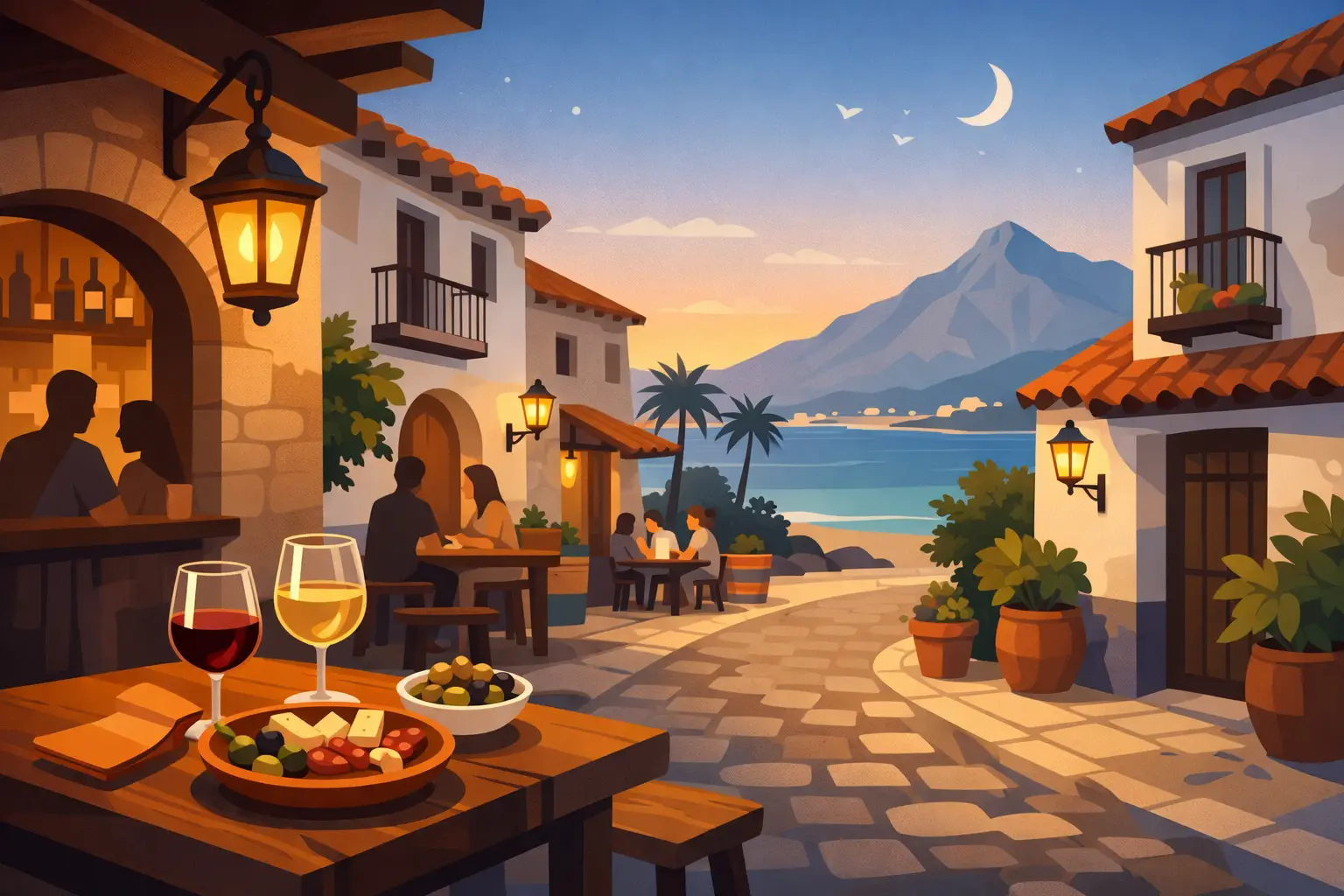
You can tell a lot about a town by the sound inside its taverns. Not the polished terrace on the main drag with laminated photos of paella, but the room where glasses clink, jamon is sliced to order, and the barman greets half the guests by name. If you are wondering how to find authentic taverns while visiting Marbella, the answer is rarely to follow the biggest signs or the busiest seafront corners. It is to learn what real local character looks, smells and feels like.
For travellers who care about food, culture and the stories behind both, an authentic tavern is not just somewhere to eat. It is where a place reveals itself. In Andalusia, that might mean a bar with handwritten specials, a family recipe for albondigas, a sherry poured without fuss, or a corner filled with old feria photographs. The best ones do not try too hard. They simply belong to the life of the neighbourhood.
How to find authentic taverns without falling for tourist traps
The first clue is usually not on the plate. It is in the rhythm of the place. A genuine tavern tends to have a natural flow – locals dropping in for a quick caña, staff who move with confidence, regulars who do not need menus, and a room that feels lived-in rather than staged. Tourist-focused venues often work the other way round. They are designed to be understood instantly by someone passing for ten seconds.
That does not mean every traditional tavern looks old-fashioned, and it certainly does not mean every polished place is inauthentic. Some excellent houses have been refurbished beautifully. Some humble-looking bars rely too heavily on frozen tapas and footfall from visitors. Authenticity is less about age or rustic decor and more about whether the place has a real relationship with local food culture.
A useful rule is to look for specificity. If a tavern serves regional dishes with confidence, uses local wines, and has a menu shaped by Andalusian habits rather than international expectations, you are usually on the right track. If the menu tries to please every nationality at once, quality and identity often get diluted.
What an authentic tavern usually gets right
Food is the obvious test, but not in the way many visitors think. Authenticity is not about having the longest tapas list. It is about doing the right things well. A smaller menu can be a very good sign, especially when the kitchen is focused on a few dishes that make sense for the area and the season.
Look for signs of house pride. Is the ensaladilla clearly homemade? Are the croquetas described with care rather than generic labels? Is there a dish the staff recommend immediately because it is what the kitchen is known for? In a proper tavern, there is usually something with a story behind it, even if no one announces it dramatically.
Drinks matter too. In Andalusia, a tavern with some respect for tradition will often offer decent sherry, vermouth, local beer, or wines that reflect the region instead of a purely generic drinks list. The way drinks are served tells you something. A bar that takes a little care with temperature, glassware and pairing tends to take similar care in the kitchen.
Then there is service. In a real local tavern, warmth often comes before polish. You may not get a rehearsed welcome, but you might get something better – directness, honesty and recommendations that are meant sincerely. That human element counts for a lot.
Where to look in Marbella
If you want to understand how to find authentic taverns in Marbella, start by changing your map of the town. The most obvious restaurant rows are not always where the strongest local character lives. Instead, spend time in and around the older streets, where businesses are more likely to have roots, repeat custom and a connection to everyday life.
Marbella Old Town is especially rewarding for travellers who enjoy eating with context. Here, the lanes are not only beautiful, they also make room for smaller venues tucked into corners and side streets where passing trade is not the only business model. The atmosphere shifts quickly from polished and international to intimate and distinctly Andalusian, sometimes within a minute’s walk.
That said, location alone is not a guarantee. Some taverns in prime areas are excellent, while some hidden spots survive mainly because they are hidden. The trick is to combine geography with observation. If a street feels full of places trying to pull you in, keep walking. If a bar seems busy without advertising itself much, pay attention.
The small details most people miss
Menus translated into six languages are not automatically a bad sign. Marbella welcomes an international crowd, and many good places adapt sensibly. What matters is whether the menu still feels anchored in local identity. If the Spanish dishes look like an afterthought, that tells you plenty.
Pay attention to timing. A tavern that fills at local eating hours rather than only at early tourist dinner times often has a stronger neighbourhood base. Notice who is eating there. Couples sharing a few plates, older regulars at the bar, small groups ordering familiar favourites – these are often encouraging signs.
Look at the walls, but do not stop there. Old barrels, hanging hams and vintage posters can be charming, but decor is easy to fake. What is harder to fake is confidence. Staff who know the menu deeply, a kitchen that sends out dishes with consistency, and a crowd that behaves as if this is part of normal life – those are stronger signals than any design choice.
Sound helps too. A room with conversation in Spanish, a bit of background bustle, and the occasional shouted order to the kitchen often feels very different from a place built mainly around curated ambience. Neither is inherently wrong. But if you are chasing authenticity, atmosphere created by real use is worth more than atmosphere designed for effect.
Ask better questions and you will get better recommendations
Many travellers ask hotel staff where to eat and receive safe, convenient suggestions. There is nothing wrong with that, but if you want the places with soul, ask differently. Instead of asking for the best tapas, ask where people go for a late glass of wine and two proper plates. Ask which tavern still feels local. Ask where staff would take a friend who cared about Andalusian food rather than just a good view.
This is where local guidance becomes invaluable. The best recommendations are rarely random. They come from years of trust, repeat visits and knowing who still cooks with integrity. That is one reason guided food experiences can be such a shortcut to the real thing. A good guide does not just know where to go. He knows why a place matters, who runs it, what to order, and how it fits into the wider story of the town.
Michel has spent decades in hospitality and over 20 years living in southern Spain, building exactly that kind of local knowledge. Travellers who once searched for Taste Marbella reviews Michel often mention the same thing – not just the food, but the depth, the history and the feeling of being shown the real place by someone who genuinely knows it. Today, guests who love that educational style can book him directly for a more personal experience through his own guided work in the Old Town.
Why authenticity is not always obvious at first glance
Some of the best taverns are not love at first sight. They may be noisier, simpler or less visually perfect than the places built for social media. They may serve the best dish of your trip in a room with plain tiles and no mood lighting. That is part of the charm.
There is also a trade-off between discovery and certainty. Wandering can lead to wonderful surprises, but it can also mean a few average meals. If you have time, curiosity and patience, exploring on your own is part of the pleasure. If your holiday is short and you want to get it right, insider guidance can save you from the guesswork.
The key is to decide what kind of experience you actually want. If you are looking for comfort, views and easy familiarity, many polished venues will serve you well. If you want stories, regional flavour and the sense that you have stepped briefly into local life, then it pays to be more selective.
The real answer to how to find authentic taverns
In the end, learning how to find authentic taverns is really about learning how to recognise belonging. The right places do not merely serve local dishes. They feel connected to the people, habits and memories around them. You notice it in the menu, in the pace of service, in the confidence of the kitchen, and in the fact that the room would still have a heartbeat even if no tourists walked in that day.
Marbella has those places, but they rarely announce themselves loudly. You find them by slowing down, looking beyond the obvious, and valuing character over presentation. And once you find one, stay a little longer than planned. Order the dish the house is proud of, ask what people here drink with it, and let the tavern tell you something real about where you are.