Blog
Are Food Tours Worth It? A Marbella Guide

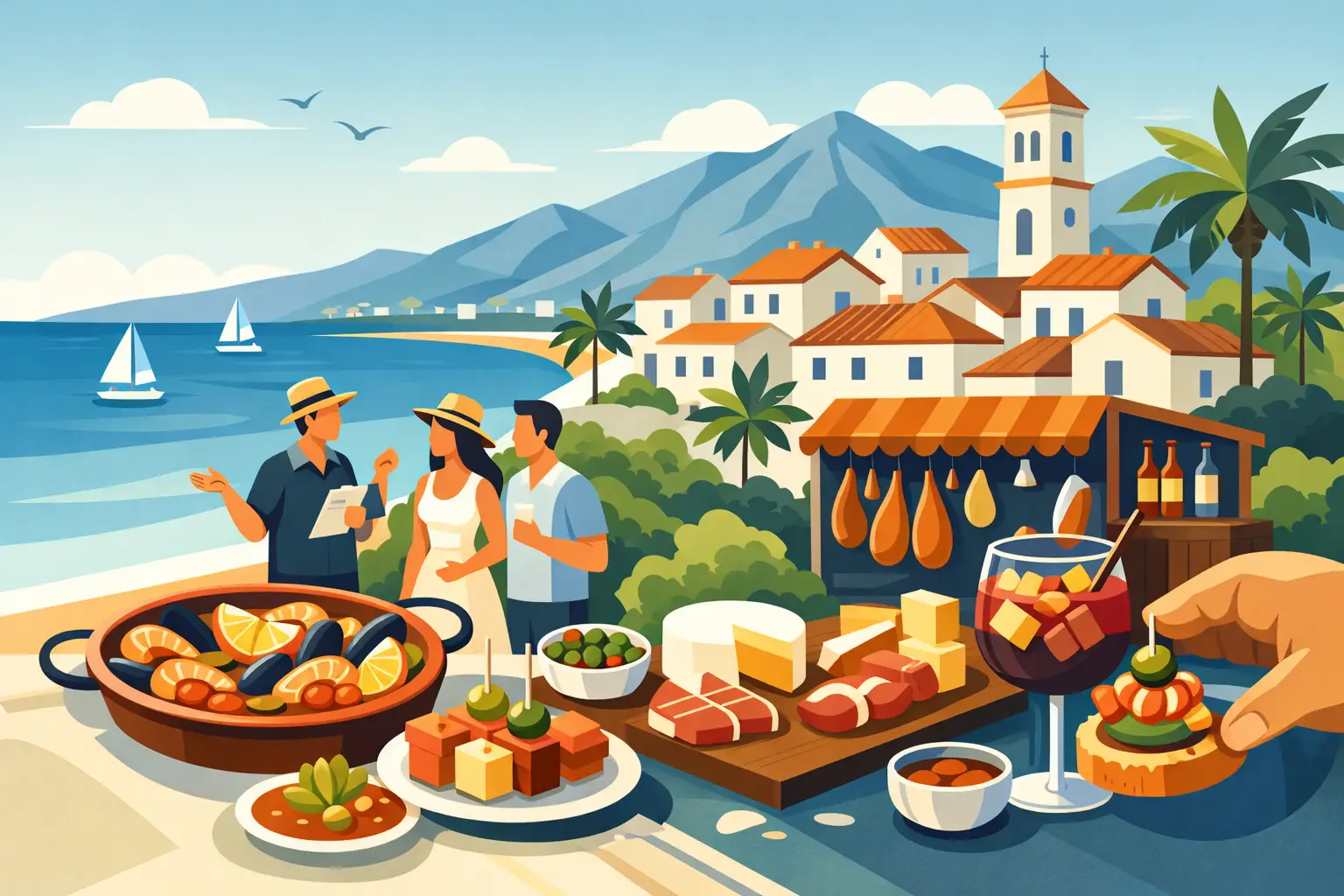
A plate of croquetas can be excellent almost anywhere in Marbella. The difference is knowing which small bar still makes them with care, why the family behind it has kept the recipe unchanged, and what to order alongside them. Are food tours worth it? For travellers who want that kind of context, rather than simply a list of restaurants, they often become one of the most memorable hours of a holiday.
A good food tour is not about racing between venues to eat more than you need. It is about understanding a place through its tables, markets, customs and people. In Marbella, that means moving beyond the polished promenade and stepping into the narrow streets where old-fashioned taverns, local produce and Andalusian stories still have a home.
Are food tours worth it for your holiday?
They are worth it when they save you from the most common travel frustration: sitting down somewhere pleasant, ordering cautiously, and leaving without ever quite knowing whether you have experienced the real local food. A guide removes much of that uncertainty. You arrive with a plan, trusted stops and someone who can explain what is on the plate before you take the first bite.
The value is not only in the tastings. It is in the confidence to try dishes you might otherwise overlook, from a carefully seasoned ensaladilla rusa to jamón cut by hand, local cheeses, fresh seafood or a glass of regional wine chosen to suit the food. In a short time, you can learn how Andalusian cooking has been shaped by the sea, the mountains, Moorish influence, trade and the simple pleasure of sharing small dishes around a table.
For couples, a food tour can also take the pressure out of planning a special evening. For families and small groups, it gives everyone a shared experience rather than another meal where each person is scrolling through reviews. And for first-time visitors, it creates a useful foundation: after a few guided stops, you are far more likely to order with confidence for the rest of your stay.
That said, food tours are not automatically the right choice for every traveller. If your greatest joy is wandering without a timetable, following your nose and accepting the occasional disappointing meal as part of the adventure, you may prefer to explore alone. If you have only a very limited budget, several restaurant meals may be better value. The best tour is a considered experience, not a substitute for every meal on your holiday.
What makes a food tour genuinely good?
A worthwhile tour feels personal, never rehearsed. It should have a sensible pace, generous but balanced tastings, and a guide who knows the people behind the counters as well as the names of the dishes. You should leave comfortably satisfied, not uncomfortably full, with a clearer sense of the destination.
In the Old Town, the setting matters as much as the tapas. A quiet square, an old church façade, a shaded lane and the history behind a traditional inn all add flavour to the experience. Food becomes a way into the city itself. You are not merely told that a dish is traditional; you understand where it belongs and why local people still return for it.
Small groups make a noticeable difference. They allow time for questions, conversation and attention to dietary needs. They also make it easier to hear the stories that can be lost in a large crowd: the family who has run a venue for decades, the market seller who knows the season’s best produce, or the custom that explains why a particular drink is served in a particular way.
A strong guide is honest, too. Not every famous Spanish dish began in Andalucía, not every busy bar is a hidden gem, and not every visitor will enjoy the same flavours. Good recommendations are based on what is fresh, local and appropriate for the moment, rather than a rigid script.
The guide is often the real value
After more than 35 years in catering and over 20 years living in Spain, I have learnt that people remember how a place made them feel. They remember the welcome at a tiny bar, the first sip of a wine they would never have chosen, and the moment a street they had walked past suddenly came alive with a story.
My passion is Andalusian culinary history, but history should never feel like a lecture delivered between bites. It belongs in the moment: when a recipe reveals an Arabic influence, when a market stall explains the rhythm of the seasons, or when a tavern’s walls tell you something about the Marbella that existed long before the resort became internationally known.
Travellers searching for Taste Marbella reviews Michel may notice my name appearing in the kind words left by guests from my years leading tours there. I am grateful for every one of those experiences. Guests who enjoyed that deeper, historic and educational style can now book directly with Marbella Flavours for a three-and-a-half-hour tapas and educational tour shaped by the same care, local relationships and genuine curiosity.
If you are looking for a Michel Marbella food tour, expect more than a checklist of popular dishes. Expect a warm introduction to places that matter, time to ask questions, and food chosen because it says something about the region. The aim is not to impress with quantity. It is to help you feel, for a few unhurried hours, less like a visitor and more like someone being shown around by a local friend.
When a food tour offers the best value
A guided experience is especially useful at the beginning of a stay. Take one early on, then use what you learn to shape the days that follow. You may discover a wine style you want to order again, a neighbourhood worth revisiting at night, or a dish that becomes your holiday favourite.
It is also valuable when you are celebrating something. Birthdays, anniversaries and reunions deserve more than the risk of choosing a restaurant from a photo. A private tour gives you room to set the pace, focus on particular interests and make dietary requirements part of the planning rather than an awkward conversation after you arrive.
For visitors with vegetarian, pescatarian or other dietary needs, communication is key. Tell the tour provider in advance, and ask whether tastings can be adapted meaningfully. Being offered a token replacement is not the same as being included in the culinary story. A thoughtful guide will make sure there is real food to enjoy and a clear explanation of how it fits into local cooking.
How to choose the best tour guide in Marbella Old Town
Look beyond the number of stops or the word “authentic” in a description. Ask yourself whether the tour explains the culture behind the food, whether it is small enough for proper interaction, and whether the guide has genuine experience in the area. The best tour guide in Marbella Old Town is not necessarily the person with the loudest sales pitch. It is the person who can read the group, knows the local rhythm, and makes each guest feel welcome.
Read reviews for details rather than just star ratings. Comments about personal attention, stories, generous hospitality and helpful adaptations usually tell you more than a broad statement that the food was nice. Consider the timing as well. A midday market visit has a different character from an evening tapas walk, and both can be wonderful when they match your plans.
Finally, choose a tour that leaves room for surprise. The most satisfying experiences have structure, but they never feel mechanical. Perhaps a vendor has an exceptional batch of tomatoes that day, a chef has prepared something seasonal, or a guest asks a question that sends the conversation down a fascinating local path. That is where a guided food tour becomes something more than an itinerary.
The best test is simple: choose the experience that makes you curious. Marbella has plenty to show you, but its most lasting flavours are often found when you slow down, pull up a chair and let someone who knows the city share its stories with you.