Blog
Marbella Local Market Food Experience

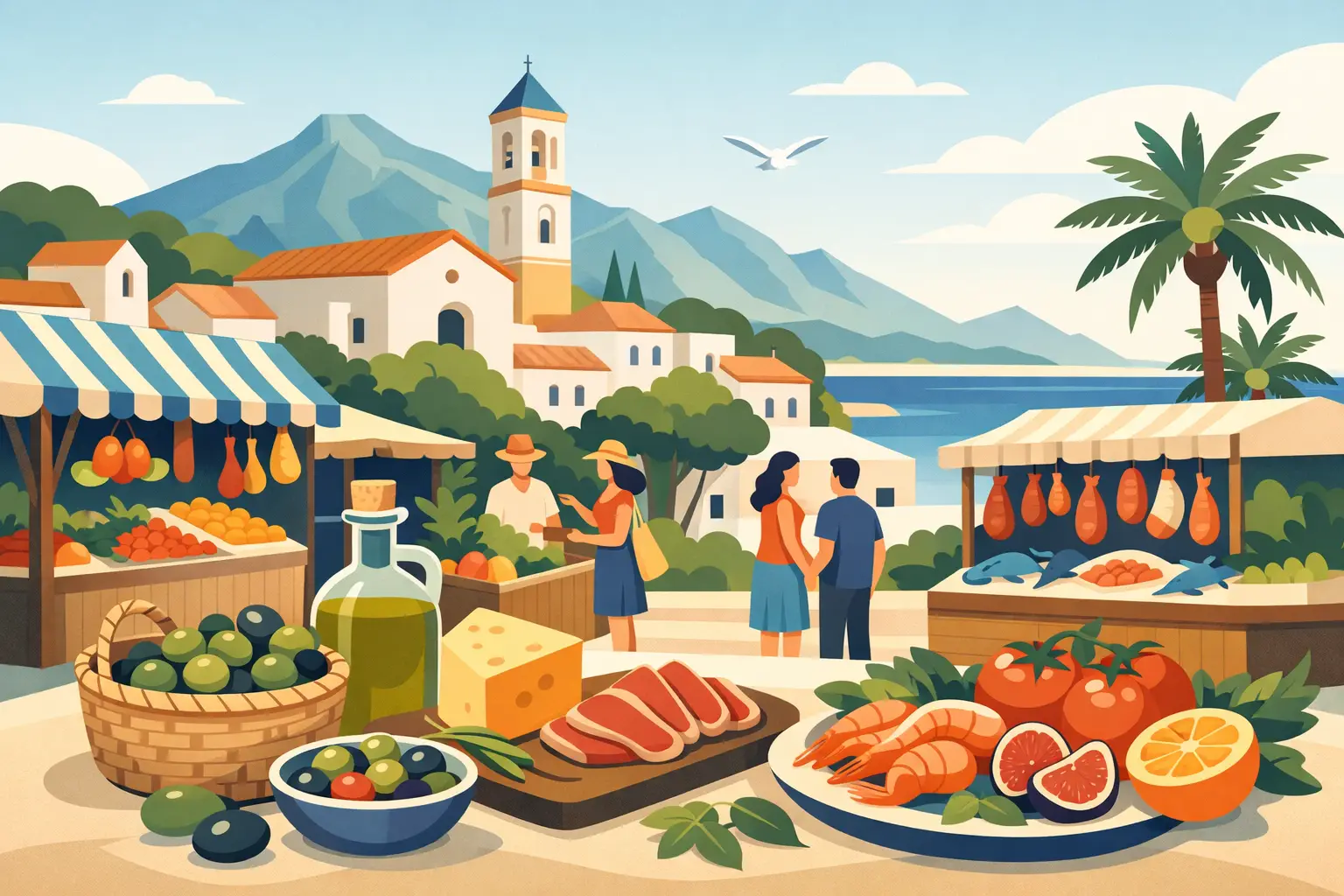
By mid-morning, Marbella’s market stalls are already speaking their own language. Ice glints over silver fish, tomatoes smell of sun rather than refrigeration, and a vendor will often tell you exactly how to cook what you’ve just bought, whether you asked or not. That is the heart of a Marbella local market food experience – not just tasting good food, but stepping into the daily life that shapes it.
For travellers who want more than a restaurant reservation, the market offers something richer. It shows you what locals actually buy, what is in season, what a family might cook that afternoon, and why Andalusian food is so much more than a list of famous dishes. Marbella can look polished from the outside, especially along the marina and beach clubs, but its food culture still lives in very human places – among market counters, old taverns, neighbourhood bars, and the conversations between them.
What makes a Marbella local market food experience special
A good market tells the truth about a place. In Marbella, that truth is Mediterranean, deeply Andalusian, and shaped by the sea, the hills, and long habits around eating well without fuss. You will see olives in several shades, cured meats with real depth, cheeses that deserve a proper pause, and produce that changes with the weather rather than with a supermarket planogram.
The market is also where Marbella feels least staged. You are not looking at a version of the town prepared for visitors. You are watching people pick out prawns for lunch, asking whether the peaches are sweet yet, or debating which cut of meat suits a slow Sunday meal. For many visitors, this is the moment Marbella becomes a place rather than a postcard.
There is another reason the market matters. Food in Andalusia is social before it is performative. Meals are built around sharing, timing, and appetite. A market visit helps you understand why a simple tapa can be excellent when the ingredients are right, and why locals care so much about freshness, olive oil, bread, and seasonality. It gives context to everything you eat afterwards.
The flavours to look for at Marbella’s market
If you arrive hungry, you are doing it correctly. A market visit should sharpen your senses. Depending on the season, you may come across deep red tomatoes, green peppers, aubergines, stone fruit, herbs, and citrus, all carrying that unmistakable southern intensity. The colours are beautiful, but it is the smell that stays with you.
Seafood is often the emotional centre of the experience. Marbella’s coastline shapes local cooking in obvious and subtle ways, and fish counters can be a masterclass in what the area values. Anchovies, sardines, squid, hake, prawns, clams – each has its place, and each points towards a different style of cooking, from grilling and frying to rice dishes and stews.
Then there are the supporting characters that quickly become stars: jamon sliced with care, manchego and regional cheeses, almonds, olives, local pastries, and wines that make immediate sense once food is on the table. Andalusian cuisine does not need complication to impress. It needs quality and confidence.
More than tasting – the human side of the market
This is where many travellers get the surprise they were not expecting. The real value of a Marbella local market food experience is not simply what you eat. It is what you hear from the people behind the counter.
A fishmonger might explain which catch is best that day and why the weather changed the selection. A produce seller might point you towards the sweetest fruit and wave away something that is not quite ready. A deli owner may talk about curing methods, family suppliers, or the right wine to serve with a particular cheese. These are small exchanges, but they change the pace of your visit. You stop consuming a destination and start relating to it.
That matters even more if you are visiting Marbella for only a few days. Left to yourself, it is easy to drift towards the obvious places and miss the everyday food culture that locals value most. A market can bridge that gap, especially when you have someone beside you who knows the vendors, understands the ingredients, and can translate not only the language, but also the customs around what and how people eat.
Why a guided market visit often gives you more
Some travellers love to wander independently, and there is real pleasure in that. If you are confident, curious, and have time to spare, you can certainly enjoy the market on your own. But there is a difference between seeing a market and understanding it.
A guided experience adds layers you would rarely access by chance. You begin to notice which products are genuinely local and which are simply popular. You learn why certain dishes belong to particular seasons, why one olive oil has peppery notes while another feels softer and rounder, and why an unassuming tavern nearby may serve a better lunch than a place with sea views and a polished menu in four languages.
This is also where small-group food tours shine. The best ones do not rush you from tasting to tasting. They connect the market to the streets around it, to Old Town history, to family-run venues, and to the people who keep traditional food culture alive. Instead of ticking off samples, you build a picture of Marbella through flavour.
For many guests, that insider access becomes the memory they talk about most once they get home. Not only the food itself, but the sense of being welcomed into a side of Marbella that feels personal and real.
Marbella local market food experience and the Old Town connection
The market does not exist in isolation. To understand it properly, you need to feel how it links with Marbella’s Old Town, where narrow streets, whitewashed façades, and shaded squares still hold the rhythm of an older Andalusia.
This is one of the pleasures of combining market tastings with a walk through the historic centre. Ingredients seen raw at the market often reappear later as tapas, stews, montaditos, or desserts in traditional venues nearby. Suddenly, what looked like a beautiful display becomes part of a living chain – from stall to kitchen to table.
The Old Town also adds cultural depth. Marbella has layers of history, from its Moorish past to its fishing traditions and its evolution into an international destination. Food carries traces of all of this. Spices, preservation methods, pastries, wines, and daily eating habits all tell part of the story.
That is why a thoughtful market tour feels less like a shopping trip and more like a guided introduction to the soul of the town. At Marbella Flavours, this is exactly the sort of connection we love to share – the one between a vendor’s recommendation, a hidden tavern, a local wine, and the story that makes it all click.
What to expect if you want the real thing
If authenticity matters to you, timing and approach make a difference. Go earlier rather than later, when the market still has its natural energy. Come with an appetite, but also with curiosity. Ask questions. Notice what locals are buying. Pay attention to what appears repeatedly across different stalls, because that usually tells you something about the local table.
It also helps to accept that the experience will not be polished in a glossy, luxury-hotel way. That is precisely its charm. Markets can be noisy, busy, and occasionally a little chaotic. Some stalls are visually elegant, others more practical. Not every interaction will be theatrical. The reward is that what you get is genuine.
If you have dietary requirements, a guided experience can be particularly useful. Andalusian food is generous, but not every traditional offering is equally suited to every traveller. With the right local guidance, though, it is usually possible to build a delicious experience around your preferences without losing the sense of place.
The taste of Marbella stays with you
Long after the beach photos blur together, people remember the things that felt personal. A ripe tomato eaten at the right moment. A glass of local wine poured with a story. A vendor who insisted you try one more olive. A tucked-away bar where the lunch was simple and perfect.
That is what a market does at its best. It gives you a version of Marbella you can feel, smell, and taste, and one that stays with you because it was rooted in real life rather than performance. If you want your holiday to carry a little more depth and a lot more flavour, let the market lead you. Marbella has plenty to show off, but its most memorable side is often the one found over a counter, in conversation, with something delicious in your hand.