Blog
Guided Tour vs Self Guided: Marbella Food Choice

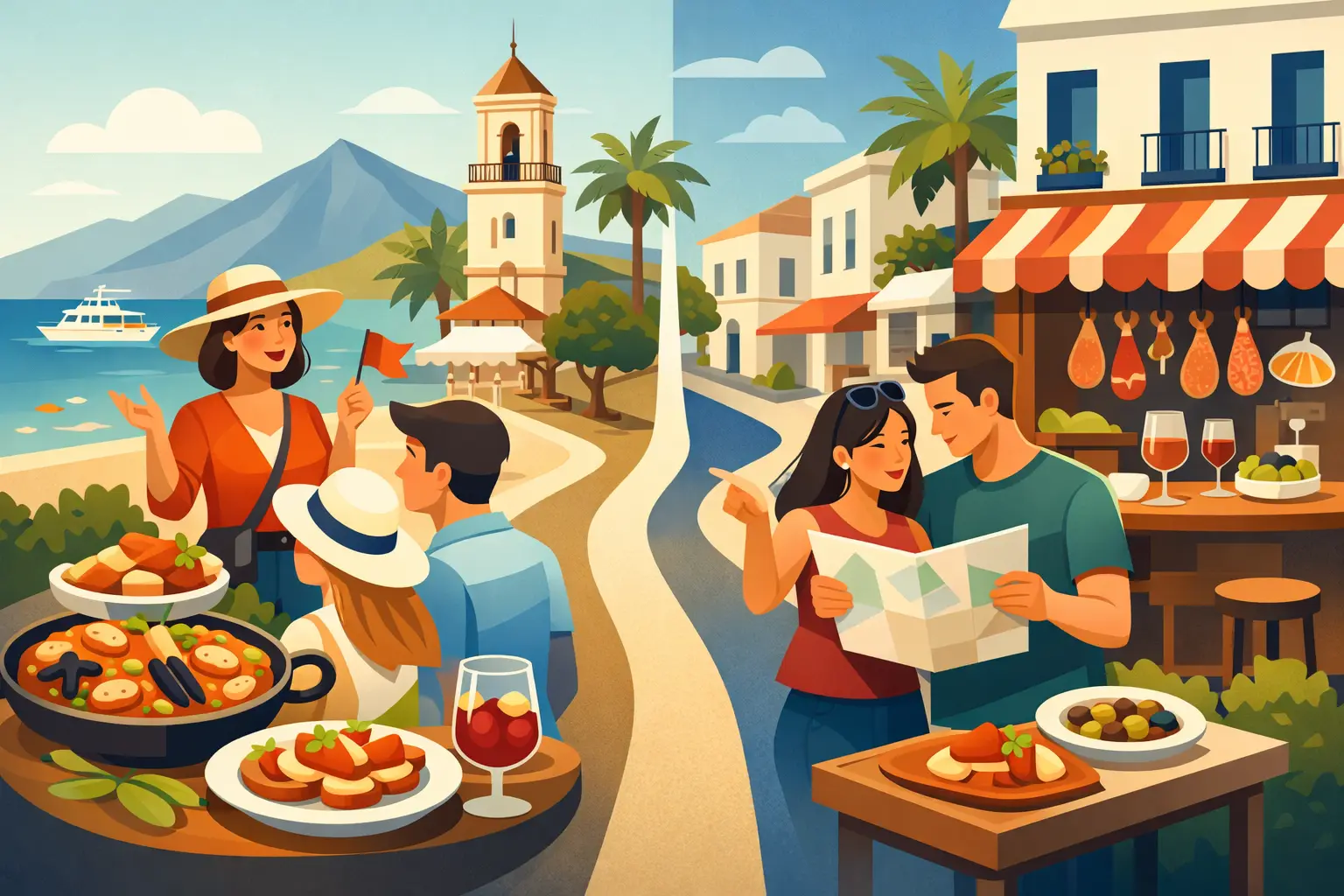
The choice between a guided tour vs self guided day in Marbella often begins with a tempting thought: surely we can find good tapas ourselves. You can, of course. But the difference between eating well and understanding where you are can be considerable. In the Old Town, a discreet doorway may lead to a family-run tavern, a recipe may carry generations of Andalusian history, and the best person behind the bar may not speak much English. This is where a local guide changes the flavour of the day.
For me, food has never been simply about filling a table. After more than 35 years in catering and over 20 years living in Marbella, I still find pleasure in explaining why a simple dish of anchovies, jamón or slow-cooked stew matters here. A good food tour should leave you happily full, certainly, but it should also make the streets feel more familiar and the city more personal.
Guided tour vs self guided: what are you really choosing?
A self-guided wander gives you freedom. You can linger over coffee, change plans when the sun comes out, stop for a photograph, or choose a table simply because it feels right. For confident travellers who enjoy researching restaurants, speak some Spanish, and have several days to explore, that freedom can be a genuine pleasure.
The trade-off is time and context. Marbella has plenty of attractive places to eat, especially around the busy areas, but the most convenient option is not always the most rooted in local cooking. A promising menu may be designed for passing visitors. A truly traditional venue may look modest from outside, have no polished online presence, or serve a dish whose importance is easy to miss without somebody to tell its story.
A guided food experience is not about removing all spontaneity from a holiday. It is about giving your limited time a stronger starting point. You arrive knowing that each stop has been chosen with care, that the order of dishes makes sense, and that there is someone to introduce the people and traditions behind the food.
Meet Michel, your local host at the table
My name is Michel Ende, and Marbella has been my home for the best part of two decades. I came from a long career in hospitality, but Spain gave that experience a different direction. Here, meals are woven into daily life. The market is not merely somewhere to shop. The old tavern is not merely somewhere to have a drink. They are places where local knowledge, family habits and regional pride meet.
Over the years, I have listened to chefs explain a family recipe, watched vendors judge the morning’s produce, and learned which details make a dish properly Andalusian rather than simply Spanish in name. That is the knowledge I enjoy sharing. It is not a rehearsed lecture delivered between bites. It is a conversation, shaped around what guests are tasting and what they want to know.
Some travellers first come across my name while reading Taste Marbella reviews Michel is mentioned in. I spent several years leading tours for Taste Marbella, and I am grateful that so many former guests remembered the experience warmly in their five-star feedback. They often mention the history, the humour, the generous pace and the feeling of being shown a side of the city they would not have found alone.
Those who enjoyed that deep-dive, educational style can now book me directly through Marbella Flavours. I lead a 3.5-hour Tapas & Educational Tour designed for curious visitors who want to taste with purpose, not simply collect restaurant recommendations.
The stories behind the plate
Andalusian food is shaped by geography and by centuries of exchange. Olive oil, almonds, citrus, salt fish, wine, pork, Moorish influences and the produce of nearby farms all have a place in the region’s culinary story. On a good day, you might taste something that seems wonderfully straightforward, then discover that its preparation, ingredient or name opens a much larger conversation.
That context matters because it turns a plate of tapas into a memory. You may remember the cool saltiness of a local fino, the smell of grilled seafood, or the first bite of a carefully prepared croqueta. Later, you may also remember why that combination belongs in this part of Spain. Food is one of the most enjoyable ways into a culture because it is immediate, sociable and wonderfully specific.
When self-guided Marbella is the better option
There is no need to book a guide for every meal. A self-guided approach is ideal when you have already built some confidence, have time to return to places, or simply want a quiet evening with no timetable. Ask for the house speciality, sit away from the most obvious tourist strips where possible, and be open to ordering a few dishes rather than trying to create a full meal from a long menu.
It can also work well after a tour. Once you have a clearer sense of the Old Town’s rhythm, a few food words in your vocabulary, and an idea of what to look for, wandering becomes more rewarding. The knowledge stays with you. You can choose another tavern, order more adventurously and recognise the difference between a generic offering and a dish with local character.
Self-guided exploring is less appealing if you have only a short break, are travelling with a group that cannot agree where to eat, or feel wary of wasting an evening on an average meal. It can be frustrating to spend an hour scrolling through reviews only to find that the place you wanted is closed, fully booked or not what you expected.
What a guided food tour adds to your holiday
The best tour guide Marbella Old Town visitors can hope for does more than point at buildings and place dishes on a table. The guide reads the group. Some guests are fascinated by the history of the streets; others want to discuss wine, local ingredients or how Spanish dining customs work. Families may need a gentler pace. Guests with dietary requirements need thoughtful planning, not an awkward surprise at the table.
Small groups make that personal attention possible. There is room for questions, introductions and the little observations that make an experience feel unforced. Instead of being ushered through a checklist of stops, you are welcomed into places where relationships have been built over time.
That local access is particularly valuable in food tourism. The person pouring your wine, preparing your tapas or serving at the counter is not scenery. They are part of the city’s living food culture. A guide who knows the venue and respects its people can create a warmer encounter for everyone.
There is value in the practical side, too. Tastings are organised, the route is considered, and the evening has a natural flow. Rather than studying maps or negotiating every decision, you can relax into the experience with your travelling companion, friends or family. For many guests, that ease is what turns a pleasant meal into one of the highlights of their holiday.
Choose the experience that suits your travel style
If independence is your priority and you love the process of discovering things by chance, take a self-guided afternoon and follow your appetite. If you want a meaningful introduction to Marbella through its food, people and stories, choose a guided experience early in your stay. You will still have plenty of time to wander afterwards, only with better instincts and a few favourite flavours already in mind.
The right choice is not about doing Marbella correctly. It is about deciding how deeply you want to connect with it. Give yourself the chance to sit at a local table, ask the questions you would not think to ask, and let one memorable meal lead you into the real character of the city.