Blog
Historic Taverns in Marbella Worth Seeking Out

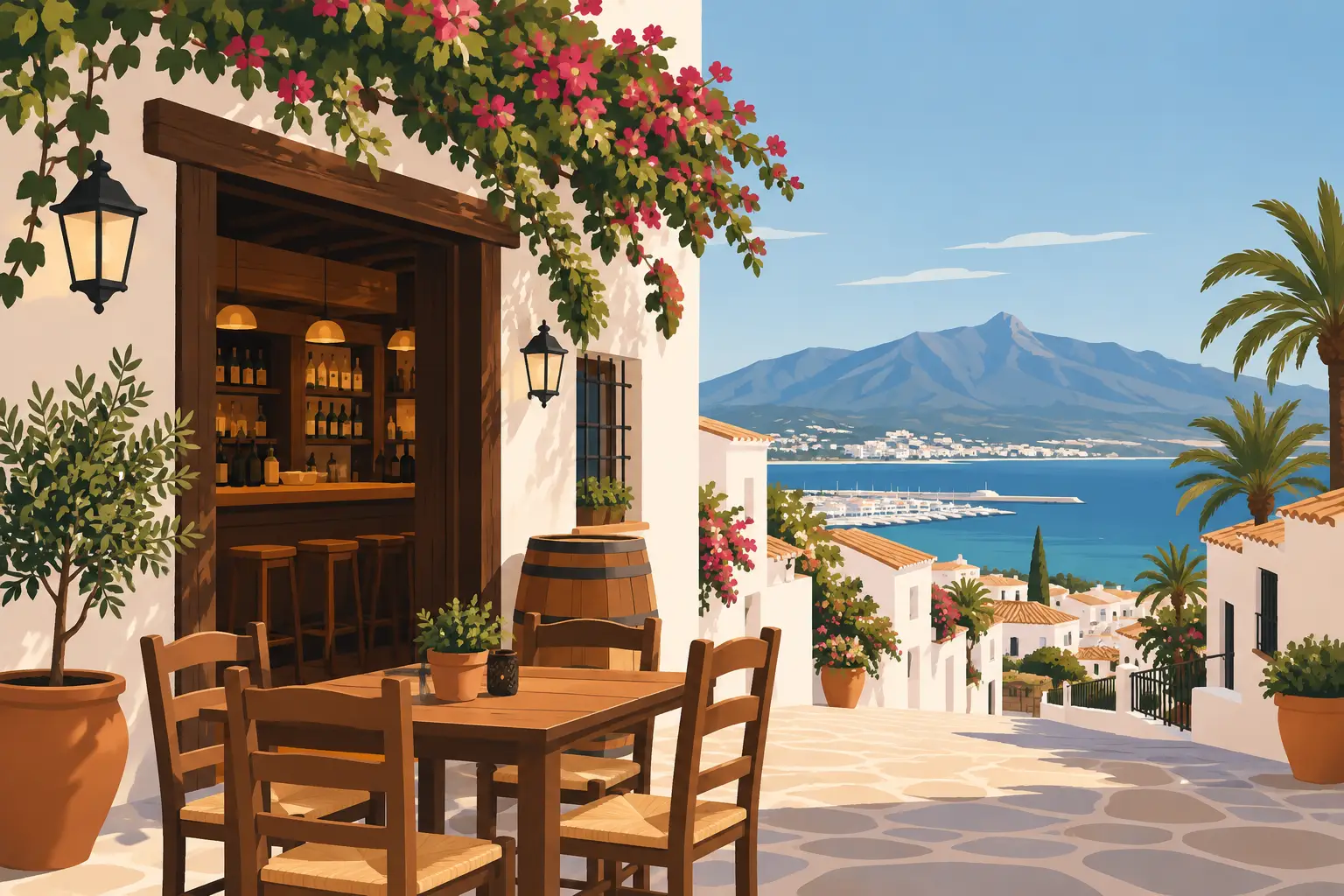
The most revealing doorways in Marbella Old Town are not always the grand ones. They may lead to a narrow bar with polished wood, a few stools at the counter and the fragrance of garlic, cured ham and something slowly simmering in the kitchen. Historic taverns in Marbella offer this quieter, more human side of the city – a place where food is part of local memory, not simply a menu for visitors.
For the curious traveller, these bars and taverns make sense of the streets around them. A plate of anchovies, a glass of fino and a conversation with the person behind the bar can tell you more about Andalusian life than a hurried photograph ever will. The pleasure lies in taking your time, knowing what to look for and understanding that the best places are often modest rather than polished.
What makes a Marbella tavern feel historic?
A historic tavern is not necessarily a building frozen in time. Marbella has changed enormously over the decades, and many long-standing family businesses have adapted their kitchens, décor and opening hours with it. What matters is continuity: familiar recipes, local suppliers, regulars who return year after year and an unmistakable rhythm that belongs to the town.
In the Old Town, this history sits close to the surface. The maze of whitewashed lanes was shaped by centuries of Moorish influence, later Christian rebuilding and everyday Mediterranean commerce. Taverns grew from this social fabric. They were places to pause after work, discuss the news, share a small bite and drink wine that did not need an elaborate introduction.
That is why it helps to arrive with the right expectations. You may not find a perfectly preserved 18th-century interior or a dramatic sign declaring a bar to be ancient. Instead, you may find a chef who still makes a traditional stew, an owner who knows exactly how a particular sherry should be served, or a counter where the same local families have gathered for years. That is the living history worth seeking.
Historic taverns in Marbella and the art of the counter
The counter is the heart of a proper Andalusian tavern. It is where a solo guest feels welcome, where regulars exchange greetings and where the day’s best dishes are often discussed before they reach the table. Sitting at it, rather than immediately asking for the biggest table outside, can change the whole experience.
Look for the small signals. A handwritten board may mention seasonal dishes. You may see legs of jamón being carved to order, bottles of manzanilla chilled and ready, or plates of olives placed down without ceremony. None of this needs to be theatrical. In fact, the most memorable taverns tend to feel unconcerned with impressing anyone.
Timing matters, too. At lunchtime, locals may stop for a quick tapa and a beer before returning to work. In the early evening, the atmosphere begins to gather pace as friends meet for a paseo and a few shared plates. A tavern that seems quiet at one hour can be full of life at another. It depends on the day, the season and whether Marbella’s residents are in town or enjoying the beach.
The flavours that carry the story
Food in these taverns is direct, generous and rooted in ingredients rather than fashion. The best order is rarely about ticking off famous dishes. It is about recognising what is fresh, asking what has been prepared that day and sharing a little more than you thought you needed.
Start with the coastal influence. Boquerones, whether marinated in vinegar or lightly fried, are a classic expression of the Mediterranean. Calamari, prawns and small fish may arrive simply cooked, with lemon doing most of the work. Marbella’s relationship with the sea is never far away, even among the inland lanes of the Old Town.
Then there are the deeper, more rustic flavours of Andalucía: pork cheeks slow-cooked until tender, albóndigas in a rich sauce, oxtail stew and hearty chickpea dishes when the weather turns cooler. These are not always the most photogenic plates, but they speak of home kitchens, patience and the practical wisdom of cooking well with what the region provides.
Jamón ibérico deserves its own moment. It is easy to order, but harder to understand without context. The cut, curing process and origin all affect the flavour. A good host can explain why one thin slice has a nutty sweetness and lingering depth, while another is milder and saltier. Paired with a dry fino or a local red, it becomes a small lesson in Andalusian craftsmanship.
Do not overlook the simplest things. A tomato salad in high summer, local goat’s cheese, a bowl of olives dressed with herbs, or bread served with excellent olive oil can be every bit as revealing as a signature dish. Historic tavern food is often about restraint. When the product is right, it does not need to shout.
How to visit without turning it into a checklist
The temptation in Marbella is to rush. There is the beach, the marina, the shops and the promise of another restaurant around every corner. But tavern culture rewards a slower approach. Choose two or three stops rather than trying to cover the entire town in one afternoon, and leave room for an unexpected recommendation.
If you are unsure what to order, be honest. Ask what the kitchen is proud of that day or what local guests tend to choose. A thoughtful question opens a far better conversation than requesting a generic selection of tapas. Dietary requirements can usually be accommodated when communicated clearly, although traditional kitchens may have more limited options than modern restaurants.
It is also worth remembering that authenticity is not measured by how old a chair looks or how little English is spoken. A warm welcome, care with ingredients and genuine local character are better signs. Some beloved taverns are lively and informal; others are quieter, with a more traditional feel. The right choice depends on whether you want an animated evening, a serious wine conversation or a leisurely introduction to regional cooking.
A local story in every shared plate
After more than 20 years living in Marbella and over 35 years in catering, I still find that a good tavern can reveal something new. A recipe changes with one cook. A familiar street has a story you had never heard. A bar owner introduces you to a wine that makes perfect sense with the dish in front of you.
That is the spirit behind Marbella Flavours. Our small-group Tapas & Educational Tour is not designed to march guests through a string of anonymous tastings. It is a 3.5-hour walk through food, history and the personal connections that give the Old Town its character. For travellers who enjoy the deeper, story-led style of a food experience, booking directly means joining me at the table and hearing the details that guidebooks tend to miss.
The real pleasure of Marbella’s taverns is not claiming that you found a secret. It is leaving with a stronger feel for the people, produce and traditions behind your meal. Take a seat at the counter, order with curiosity and allow one unplanned conversation to shape the rest of your evening.