
Blog
Andalusian Food Guide for Marbella Visitors

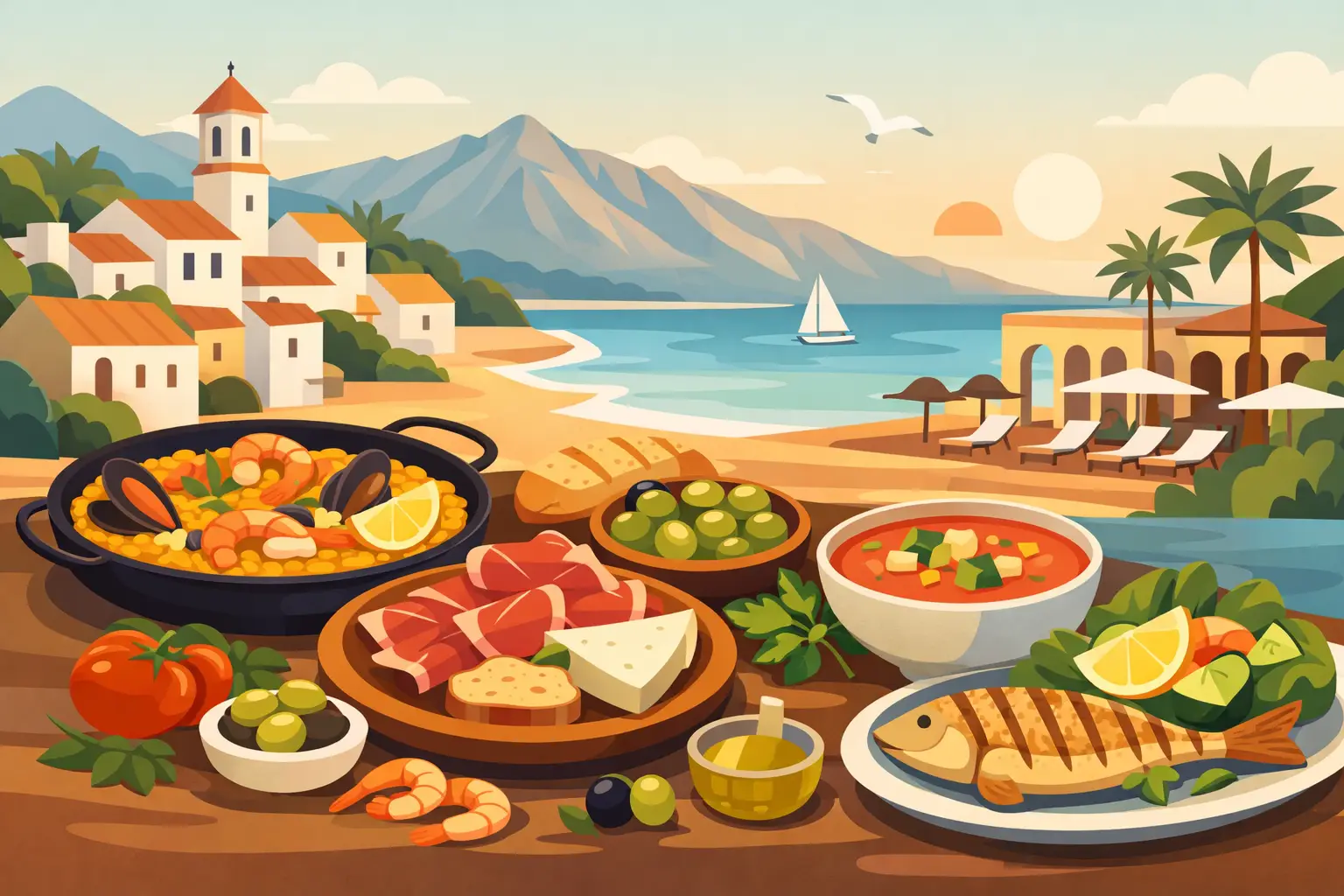
You can learn a lot about southern Spain from a plate set down on a marble bar. A spoonful of ajo blanco tells you almonds matter here. A slice of mojama hints at old trade routes and salt winds off the coast. A small dish of slow-cooked oxtail says Andalusian cooking is patient, generous, and never in a hurry. If you are looking for an Andalusian food guide that helps you eat with more confidence and more pleasure while visiting Marbella, start there – with the stories behind the flavours.
Andalusia is not one single cuisine wrapped up in a neat label. It is a region of fishing towns, mountain villages, olive groves, market cities, and old taverns where recipes have travelled through Roman, Moorish, Jewish, and Christian histories. That mix is what makes eating here so memorable. The food can be humble or refined, but it is nearly always rooted in place.
An Andalusian food guide to what really matters
Visitors often arrive expecting endless paella and sangria. What they find, if they are lucky, is something far more local. Andalusian food is built around olive oil, garlic, almonds, sherry, fresh seafood, pork, pulses, seasonal vegetables, and bread that exists for a reason – to mop up sauces that should never be left behind.
In Marbella and across the region, tapas are not just small portions. They are a way of eating that suits conversation, wandering, and curiosity. One stop turns into three. One glass becomes a pairing. One dish opens the door to a bit of local history. That is why food tours work so well here when they are led properly. You are not simply fed. You are shown how the city tastes.
I am Michel, and after more than 35 years in catering and over 20 years living in Spain, I still believe the best way to understand Andalusia is across the table. For years, many travellers came on my tours because they wanted more than a quick bite. They wanted context, tradition, and the kind of local detail that changes the whole experience. If you have come across Taste Marbella reviews mentioning Michel and the educational style people appreciated, that same spirit now lives in the experiences I lead independently.
The dishes every Andalusian food guide should explain
The first misunderstanding to clear up is that not every famous Spanish dish is equally Andalusian. Some are national favourites, but this region has its own signatures, and they are worth seeking out.
Cold soups that make sense in the heat
Gazpacho is the obvious name, but it is only the beginning. Ajo blanco, often called the original white gazpacho, is one of the great dishes of Málaga province. Made with almonds, garlic, olive oil, bread, water, and usually a garnish of grapes or melon, it is refreshing, elegant, and deeply local. Salmorejo is thicker and more common as you move towards Córdoba, rich with tomato and bread, often finished with egg and cured ham.
If you try these in the right setting, you begin to understand Andalusian cooking at its best – simple ingredients, careful balance, and no need to overcomplicate what already works.
Fried fish, but done properly
One of the great pleasures of the southern coast is pescaíto frito. On paper, it sounds ordinary: small fish lightly floured and fried. In practice, it depends entirely on freshness, temperature, oil, and restraint. Done well, it is crisp, light, and clean, not heavy.
Anchovies, baby squid, red mullet, and hake all appear depending on the season and the venue. Near the coast, seafood should taste of itself first. If batter is too thick or the fish is drowned in garnish, something has gone wrong.
Cured and preserved flavours with history
Mojama, salt-cured tuna, is one of those foods many travellers would never order on their own, then remember long after the trip. Thinly sliced, slightly firm, intensely savoury, it speaks of the Andalusian coastline and a preservation tradition that goes back centuries. Good olives, local cheeses, boquerones en vinagre, and cured pork products also belong in that same conversation. These are not random bar snacks. They are part of the region’s pantry.
Slow-cooked classics from the interior
Andalusia is not only beaches and seafood. Deeper inland, and often in traditional taverns, you find dishes built for long afternoons and old recipes. Rabo de toro, a rich oxtail stew, is one of the best known. Flamenquín, espinacas con garbanzos, carrillada, and hearty bean dishes reveal another side of the region – earthy, comforting, and often linked to family kitchens rather than restaurant trends.
This is where a guide helps. Menus can be broad, and the best choice depends on the season, the venue, and what the kitchen actually does well. A place known for grilled fish may not be where you order stews. It depends.
How to eat well in Marbella without falling into tourist traps
A proper Andalusian food guide should not only tell you what to eat. It should help you recognise where to eat it.
In places popular with visitors, presentation can be polished while the food itself stays generic. There is nothing wrong with a pretty terrace, but authenticity is rarely about décor alone. Look for signs of local rhythm: regulars at the bar, a short menu with regional dishes, staff who know the ingredients, and wines or sherries that match the food rather than simply fill space on a list.
Marbella has both polished dining and deeply traditional corners. The trick is knowing which streets still hold those older culinary habits and which venues are serving local dishes because they love them, not because the words look good on a chalkboard. That is exactly why many guests who searched for a Michel Marbella food tour wanted a guided experience rather than another meal chosen by guesswork.
Order like someone who understands the place
You do not need fluent Spanish or expert-level food knowledge. You only need a little confidence and a willingness to ask.
Start lightly and build. Order a cold soup or a couple of small plates first. Share. Notice what the room is eating. If a dish appears on several tables, there is usually a reason. Ask what is typical from the area, not simply what is popular with tourists. And if sherry is offered with a dish, take the suggestion seriously. Andalusia’s wines deserve more attention than they often get.
At the same time, avoid trying to force a checklist. Some visitors want to tick off ten famous dishes in one sitting, which sounds efficient but rarely feels enjoyable. Better to eat a few things well, in the right order, in the right place.
Why local context changes the taste
Food tastes better when you understand why it is there. That is not romance talking. It is part of the actual experience.
Ajo blanco means more when you hear how almonds shaped local cooking. A glass of sherry becomes far more interesting when you understand oxidation, ageing, and why dry styles work so brilliantly with salty snacks. Even a simple tapa of Russian salad or croquetas tells a story about household cooking, bar culture, and the long life of recipes that survive because people genuinely want to eat them again and again.
This has always been the heart of my approach as the best tour guide Marbella Old Town guests often describe in their reviews: food first, but never food without meaning. The old streets are not just a scenic backdrop. They hold layers of history – trade, religion, migration, celebration – and all of it ends up on the plate sooner or later.
An Andalusian food guide for curious travellers
If you are the kind of traveller who enjoys finding the real character of a place, Andalusian food rewards curiosity. It is generous but not flashy. It values ingredients over gimmicks and atmosphere over theatre. The best meals are often the ones that feel lived in.
That said, authenticity is not always rustic, and tradition is not always old-fashioned. Some chefs refine local classics beautifully. Some taverns remain gloriously unchanged. Both can be excellent. The question is whether the cooking still feels anchored in Andalusia rather than copied from somewhere else.
For many guests, the easiest way to make that distinction is to explore with someone who knows the people behind the bars, the vendors behind the produce, and the stories that connect one bite to the next. It turns lunch into memory.
Whether you are in Marbella for a long weekend or a longer stay, give yourself time to eat beyond the obvious. Try the almond soup. Order the cured tuna. Ask for the house speciality. Let the meal stretch a little. The region reveals itself slowly, and that is part of its charm.
If you want your holiday to taste like the real south of Spain rather than a version made for passers-by, follow the dishes with roots, listen to the stories attached to them, and leave room to be surprised. Andalusia is very good at that.