Blog
A Guide to Spanish Cured Ham in Marbella

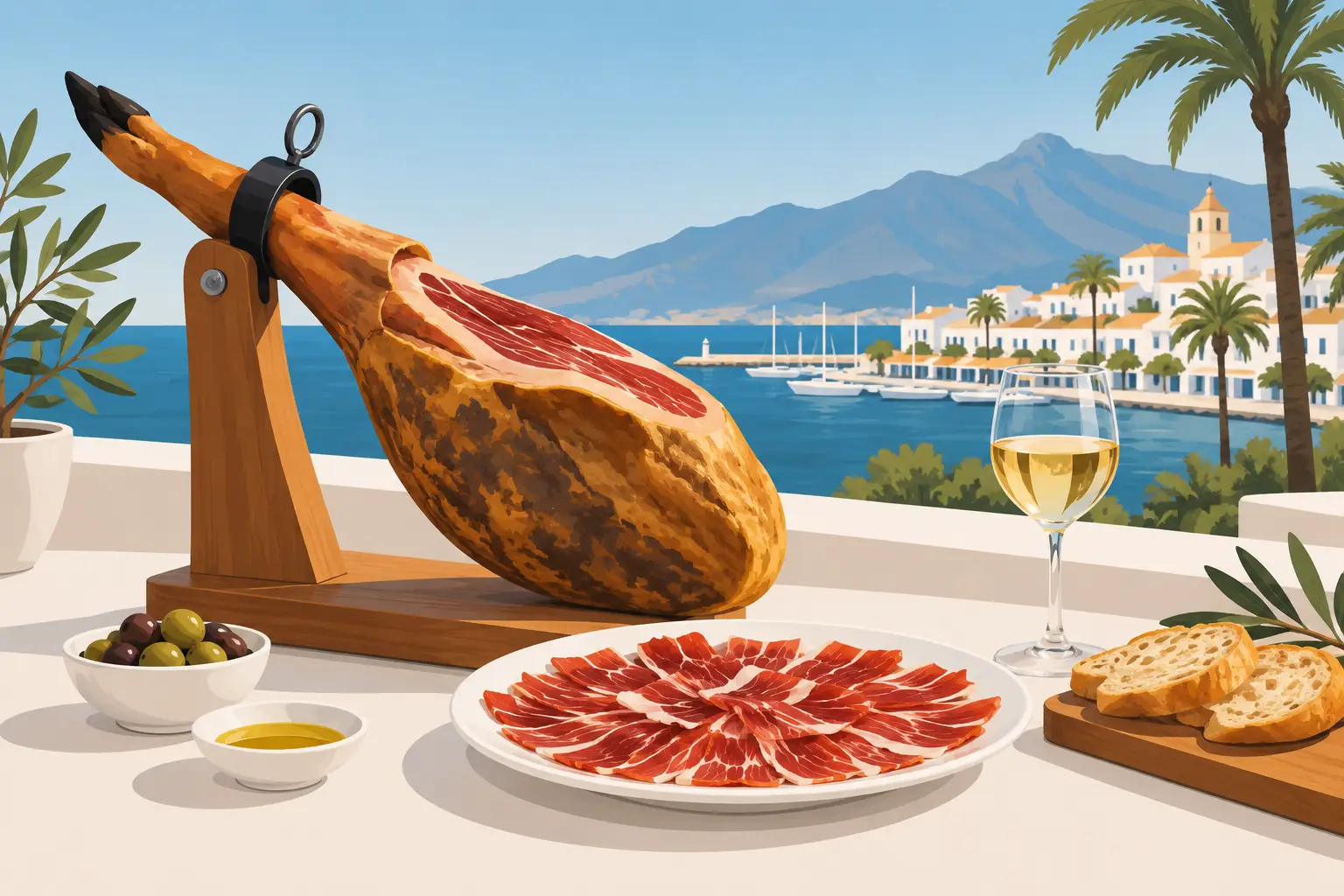
The leg on the stand is not a decoration. In a good Marbella bar, it is a promise: a little theatre, a little patience and one of Spain’s great pleasures served in paper-thin slices. This guide to Spanish cured ham will help you read the labels, understand what you are tasting and order with the confidence of someone who knows why jamón deserves time and attention.
After more than 20 years living in Marbella, I still stop when I see a skilled cortador begin to carve. The first cut releases a deep, nutty perfume; the next reveals ruby-red meat streaked with glossy fat. That fat is flavour, not something to trim away. Let it soften on your tongue and it carries the character of the animal, its feed, its curing cellar and the long months of waiting.
A guide to Spanish cured ham: start with jamón
In Spain, cured ham is broadly known as jamón. It is a whole hind leg, salted and air-cured, then sliced by hand or machine. You may also see paleta, which is the front shoulder. Paleta is smaller, often more intensely flavoured and usually better value, though it yields less meat because of the bone structure.
The two main families are jamón serrano and jamón ibérico. Neither is automatically “better” in every situation. Serrano can be excellent, especially when it has been cured carefully and served at the right temperature. Ibérico has a distinctive richness and complexity that makes it one of Spain’s most prized foods, but it is also considerably more expensive.
What matters most is not merely the price on the menu. Ask yourself what kind of moment you want. A plate of good serrano alongside a cold beer after a walk through the Old Town can be exactly right. For a slower tasting with a glass of fino or a carefully chosen Spanish red, jamón ibérico is an experience worth lingering over.
Jamón serrano: the everyday classic
Serrano means “from the mountains”, a reference to the cooler air traditionally used for curing. It is generally made from white pig breeds and cured for a minimum period that varies with the producer and style. Its flavour is savoury and clean, often gently sweet, with a firmer texture than ibérico.
On menus, you might see Jamón Serrano, Bodega, Reserva or Gran Reserva. These terms commonly suggest increasing curing time, although the producer remains important. A longer cure can bring greater depth, but it can also make a ham saltier or drier. There is no need to chase the grandest description if you prefer a softer, lighter slice.
Jamón ibérico: breed, feed and patience
Jamón ibérico comes from the black iberian pig, a breed valued for its ability to store fat within the muscle. This marbling gives the ham its silky texture and layered flavour. Expect notes that can feel nutty, sweet, earthy and surprisingly persistent.
The word ibérico alone does not tell the whole story. The key distinction is how the pig was raised and fed. This is where Spain’s colour-coded labels are useful.
- Black label: 100% ibérico pigs fed on acorns during the montanera, the autumn and winter season in the dehesa oak pastures. This is jamón ibérico de bellota at its most prestigious.
- Red label: ibérico de bellota from pigs with iberian breeding, but not necessarily 100% ibérico.
- Green label: cebo de campo ibérico. The pigs have access to outdoor pasture and are fed a controlled diet that may include natural forage and feed.
- White label: cebo ibérico. The pigs are raised on feed, typically in farm settings.
These labels offer useful guidance, not a shortcut around taste. A well-kept green-label ham from a trusted producer may give enormous pleasure, while a costly black-label ham sliced too thickly or served fridge-cold will never show its best side.
The dehesa is part of the flavour
The finest bellota hams begin far from the coast, in the dehesa landscapes of western and south-western Spain. These open woodlands of holm oak and cork oak sustain the pigs during the montanera. Acorns contribute to the fat’s character, creating the soft, almost melting texture that people associate with great ibérico.
But acorns are only one chapter. Genetics, exercise, weather, salt, curing time and the judgement of the bodega all shape the final ham. Good producers cure legs slowly, often for several years, allowing moisture to reduce and flavour to concentrate without turning harsh. It is a craft of restraint. The ham cannot be rushed simply because a visitor is ready to eat it.
Protected names can also tell you where a ham was made. Jamón de Jabugo, Dehesa de Extremadura, Los Pedroches and Guijuelo are among the best-known protected designations for ibérico ham. They point to specific regions and production rules, although every producer still has their own style.
How to read a ham menu without overthinking it
When a menu simply says “jamón ibérico”, it is entirely fair to ask what type it is. A good server should be able to tell you whether it is bellota, cebo de campo or cebo, and ideally the producer. You are not being difficult. You are showing interest in a food that has taken years to make.
If you are ordering for the table, choose a smaller plate first. Jamón is rich and best appreciated before the palate becomes tired. Look for slices that are thin enough to become translucent at the edges, with a little marbling and a delicate sheen. Very dry, leathery slices or thick slabs do the ham no favours.
The temperature matters too. Never judge jamón straight from the refrigerator. It should be allowed to come towards room temperature so the fat softens and its aroma opens. On a warm Andalusian evening, that happens quickly. In cooler months, give it a few extra minutes.
Serving Spanish cured ham the Spanish way
Great ham needs very little company. In fact, too many accompaniments can hide its detail. Start with bread, perhaps a few picos or regañás, and let the first slice stand alone. The traditional combination of jamón and pan con tomate works beautifully, but use the tomato lightly so it does not drown the ham.
Manchego can be a pleasant companion, particularly with serrano, although two salty, aged foods can compete. For ibérico de bellota, I often prefer something refreshing: a crisp fino or manzanilla, a dry white wine, or simply sparkling water between bites. A full-bodied red can work, but choose one with freshness rather than heavy oak and sweetness.
Melon with jamón is familiar and enjoyable in summer, especially when the fruit is ripe but not over-sweet. It is not the only way to serve it, however. Try jamón with broad beans, artichokes, eggs or simple croquetas. In each case, the ham should be a seasoning as much as a centrepiece, adding depth rather than shouting over every other ingredient.
Buying a packet, a cone or a whole leg
For a holiday picnic or a gift to take home, vacuum-packed sliced ham is practical. Check the label for the type of ham, the curing information and the slicing date where available. Once opened, take it out of the fridge for 20 to 30 minutes before serving. If the slices stick together, separate them gently rather than tearing them apart.
A whole leg makes sense only if you will enjoy it regularly, can store it in a cool, dry place and have some confidence with a ham knife. It is not a bargain if half the ham dries out before you reach it. A paleta can be a more manageable choice for a smaller household, while a quality hand-sliced packet gives travellers the flavour without the commitment.
Be cautious with very cheap “ibérico” offers. There is nothing wrong with cebo ibérico, but it should be priced honestly. The real pleasure comes from knowing what you are buying, rather than assuming every dark hoof or dramatic label promises bellota quality.
Taste with curiosity, not rules
There is no prize for ordering the most expensive plate in the room. Some travellers fall in love with the clean saltiness of serrano; others remember the long, buttery finish of bellota ibérico for years. Try both when you can, preferably side by side, and notice the contrast in texture, aroma and length of flavour.
That small act of comparison turns a snack into a story about landscape, livestock, patience and Spanish hospitality. On a Marbella Flavours food experience, it is the kind of story I love to share at the table, alongside the people and places that keep these traditions alive. Let the ham slow you down, ask the question you were about to keep to yourself, and savour the next slice before ordering another round.