Blog
A Couples Food Tour Itinerary for Marbella

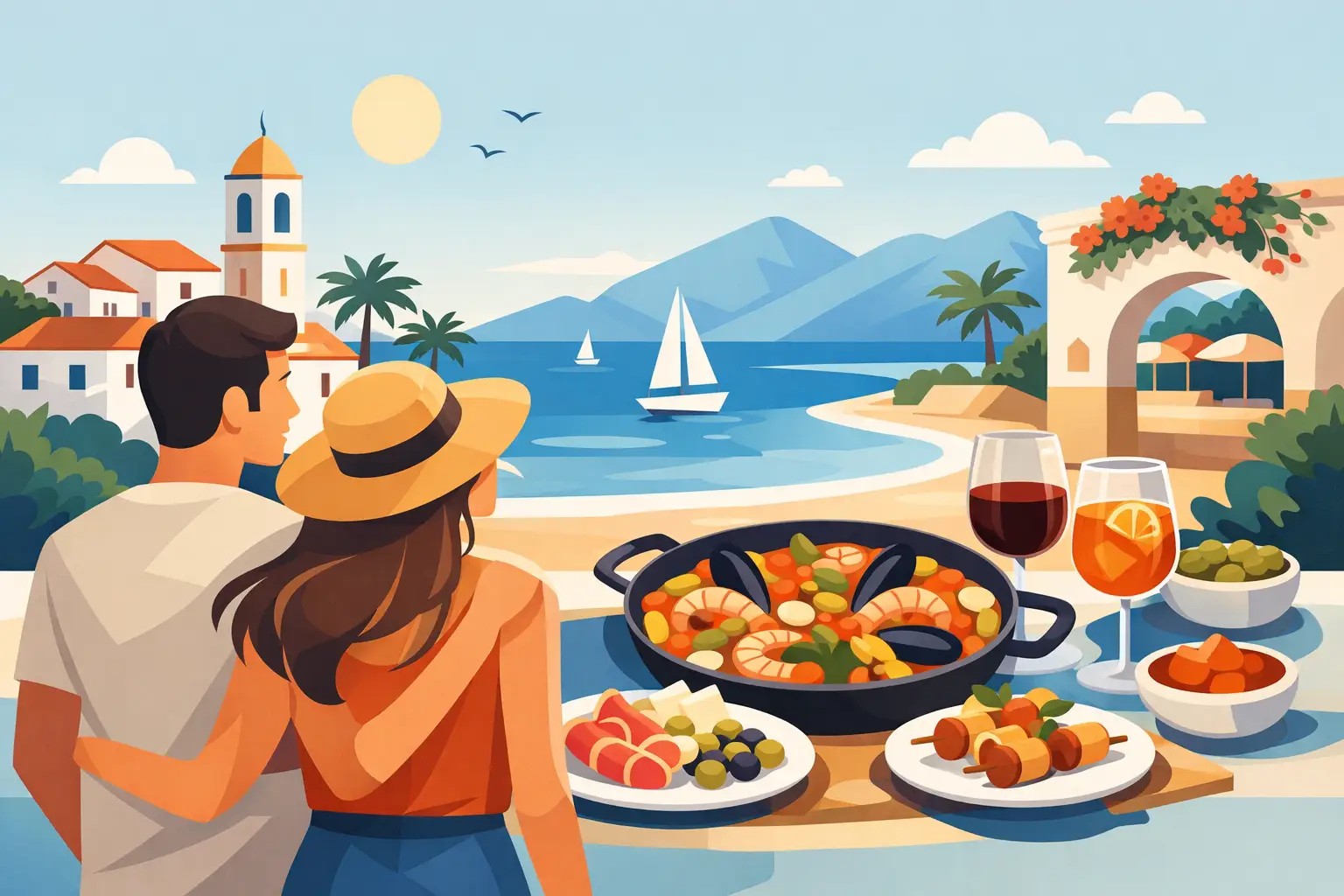
The best meal you remember from a holiday is rarely the one with the grandest view. It is the one where you both pause over a perfectly chilled glass of wine, taste something new, and realise you have wandered into a corner of the city you would never have found alone. A couples food tour itinerary in Marbella should make room for exactly those moments: generous Andalusian flavours, intimate streets, good conversation and no pressure to rush to the next attraction.
Marbella is often seen through its beach clubs, marina and polished resort image. Yet a few streets behind the coast lies a more personal side of the city. In the Old Town, whitewashed walls hold the afternoon warmth, orange trees scent the squares, and family-run taverns still serve dishes with roots far deeper than the holiday season.
Start Slowly in the Old Town
For couples, timing changes everything. A food-focused afternoon or early evening allows you to arrive without the scramble of breakfast, settle into the day, and enjoy the changing light on the Old Town’s narrow lanes. The atmosphere becomes especially lovely as locals begin their evening paseo, the relaxed stroll that turns ordinary streets into a social occasion.
Begin near Plaza de los Naranjos, but do not treat it simply as a photo stop. This historic square is a useful starting point for understanding how Marbella grew from a walled settlement into the town people know today. Look beyond the restaurant terraces and notice the balconies, tiled details and gentle irregularity of the surrounding streets. The Old Town rewards looking up, slowing down and occasionally taking the lane that seems too quiet to lead anywhere.
Before your first proper tasting, choose a light aperitif. A crisp local white wine, a fino-style sherry or a vermouth with ice and citrus can set the tone beautifully. If one of you is less confident with fortified wines, ask for a small taste before committing. The point is discovery, not proving that you can drink the most adventurous thing on the menu.
A Couples Food Tour Itinerary Built Around Sharing
The most enjoyable tasting itinerary is not a race through ten bars. It is a gradual meal, organised around dishes you can share and places that each have their own character. Four or five well-chosen stops are usually more memorable than an overfilled schedule, particularly if you want time to talk, take photographs and hear the stories behind what is on the plate.
Your first food stop should be somewhere traditional and unfussy. Start with the flavours that introduce Andalusia without overwhelming the palate: olives dressed with garlic and herbs, aged Manchego or local goat’s cheese, and thin slices of jamón. Each bite gives you something to compare. Is the cheese creamy or sharp? Does the ham taste nutty, salty or sweet? Food becomes much more fun when the tasting itself sparks a conversation.
From there, move towards a classic hot tapas dish. Albóndigas, slow-cooked meatballs in a rich sauce, are a comforting choice. So are croquetas, whose crisp outer shell gives way to a soft, savoury centre. They may sound simple, but this is precisely why they matter. In Spain, dishes like these reveal a cook’s care, family habits and a tavern’s standards more clearly than elaborate presentation ever could.
For seafood, choose according to the season and your appetite. Fried anchovies, grilled prawns or tender calamari can be wonderful, but the best option depends on what has arrived fresh and how hungry you are after the earlier stops. A good guide or host will steer you away from ordering by habit and towards what is tasting particularly good that day.
Pair seafood with a bright white wine from southern Spain, or share a cold beer if that feels more natural. There are no prizes for formal pairing rules. The pleasure lies in finding what works for the two of you, then remembering it later when you order the same bottle at home.
Leave Space for One Unexpected Dish
Every great food experience needs one small surprise. It might be a seasonal stew, a vegetable dish made with olive oil and local produce, or a recipe that reflects Marbella’s long relationship with Moorish, Mediterranean and mountain traditions. Andalusian cooking is often described as straightforward, but its history is layered. Almonds, citrus, saffron, cumin, preserved fish and olive oil all tell part of the story.
This is where a guided experience offers more than a restaurant recommendation. The right storyteller can explain why a dish exists, not merely what it contains. You begin to see that a tapas plate is connected to migration, trade, family kitchens, fishing communities and the rhythms of the local market.
Add Culture Between the Tastings
A couples itinerary works best when food and culture take turns. After a hearty tapas stop, walk for ten minutes rather than immediately sitting down again. Pass through a quieter part of the Old Town, notice a small chapel, an old doorway or a flower-filled courtyard, and let the previous course settle.
These pauses are not empty time. They are often the moments couples remember most vividly: finding a tiny square away from the crowds, sharing a joke over a slightly confusing Spanish menu, or hearing a local story that gives the evening a sense of place. Marbella has plenty of glamorous distractions, but the older centre offers something more lasting when you take it at a human pace.
If history genuinely interests you, choose an experience led by someone who knows the streets beyond a memorised script. Michel, founder of Marbella Flavours, has spent more than two decades living locally and brings a lifelong hospitality background to the stories, taverns and tastes he shares. That local familiarity can make the difference between simply eating tapas and understanding the people behind them.
Choose the Right Pace and Price Point
Private food tours are particularly well suited to couples celebrating an anniversary, honeymoon, engagement or long-awaited holiday together. You can adjust the pace, spend longer at a favourite stop and shape the tasting around your preferences. It is also the easiest option for vegetarians, pescatarians, gluten-free diners or anyone with an allergy, provided dietary requirements are shared clearly in advance.
A small-group tour can be equally rewarding if you enjoy meeting fellow travellers. The trade-off is flexibility. You may discover a new wine through someone else’s recommendation and enjoy the energy of a convivial table, but the route and timing will naturally be more structured. Neither format is automatically better. Consider whether you want a social evening or a more personal celebration.
Avoid booking a large meal immediately before or after your tour. Tapas are deceptively filling, especially when bread, cured meats, fried dishes and wine are involved. A late reservation for dessert can work, but leave room for it. If you do fancy something sweet, look for a simple finish such as churros with chocolate, almond cake or a scoop of artisan ice cream on a warm evening.
Practical Details That Keep the Evening Romantic
Comfort has a place in romance. Wear shoes suitable for cobbled streets, carry a light layer outside the hottest months, and avoid planning your most formal outfit if you expect to walk between venues. Marbella evenings can feel balmy, but stone lanes and shaded squares can be cooler than the promenade.
Keep the day before your tour deliberately light. A slow beach morning, a relaxed lunch or a wander through the shops is enough. Trying to fit in every landmark beforehand can leave you tired just as the most enjoyable part of the day begins.
It also helps to agree on one simple rule as a couple: neither of you has to like every dish. Order with curiosity, share generously, and allow yourselves a second taste before deciding. The best food memories are not built on perfect agreement. They come from trying something unfamiliar together, then laughing about which one of you would order it again.
As the evening draws on, take one final unhurried walk through the Old Town before heading back. The plates will be cleared, the glasses empty and the streets quieter, but the real souvenir will be a shared sense of having met the Marbella that exists beyond the obvious itinerary.