
Blog
Can Vegetarians Enjoy Tapas? A Marbella Guide

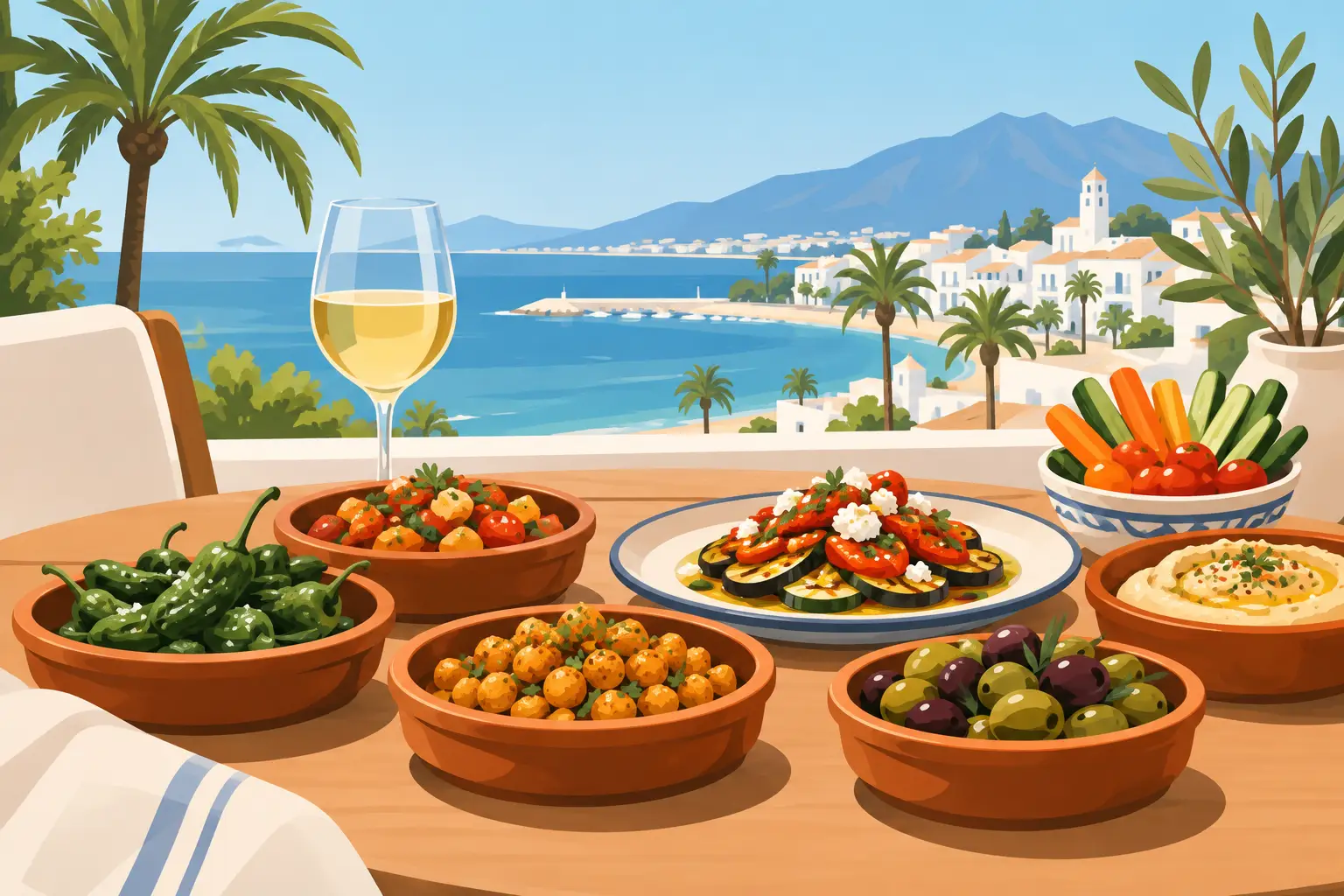
The first plate lands on the table: glossy green olives, warm bread and a dish of padrón peppers blistered in olive oil and sea salt. It is the sort of beginning that makes a tapas bar feel immediately generous. Yet many vegetarian travellers hesitate before ordering a second round. Can vegetarians enjoy tapas without spending the evening picking around ham, tuna and mysterious sauces?
Absolutely – but the best experience comes from knowing what is truly vegetarian, what needs a quick question, and which dishes show Andalusian cooking at its most delicious. Tapas is not one fixed menu. It is a way of eating: sharing small plates, ordering gradually and following the mood of the table. That flexibility can make it particularly rewarding for vegetarians.
Can vegetarians enjoy tapas in Marbella?
Yes, with a little local knowledge. Marbella’s Old Town has long been shaped by the ingredients of southern Spain: superb olive oil, market vegetables, almonds, citrus, goat’s cheese, chickpeas and bread baked for tearing and sharing. Meat and fish are central to many classic tapas menus, of course, but they are not the whole story.
The key is to avoid assuming that a vegetable dish is automatically vegetarian. A pot of lentils may have been cooked with chorizo. A seemingly simple soup can arrive with a ham garnish. Even fried potatoes occasionally come with a meat-based sauce. This is not about restaurants being careless; it is simply traditional cooking, where a little cured ham or meat stock is often used as seasoning.
When you are clear and friendly, most bars will be happy to guide you. Say, “Soy vegetariano/a. ¿Qué tapas tienen sin carne ni pescado?” This means, “I am vegetarian. Which tapas do you have without meat or fish?” If eggs and dairy are fine for you, add that you are happy with them. If you are vegan, say so specifically, as vegetarian food in Spain often includes egg, cheese or mayonnaise.
A good tapas evening is not about compromising. It is about ordering the dishes that have always deserved a place on the table.
The tapas worth looking for
Start with the classics that let local produce speak clearly. Aceitunas aliñadas, or marinated olives, are far more than a bar snack when they have been dressed with garlic, herbs, orange peel or local olive oil. Alongside them, pan con tomate – toasted bread rubbed with tomato, garlic and oil – is simple, bright and deeply satisfying.
Patatas bravas are another dependable favourite, although it is worth asking whether the sauce contains meat stock or mayonnaise if you have stricter requirements. Proper bravas should offer crisp potatoes and a sauce with character: smoky paprika, garlic, tomato, chilli or all of the above. Every kitchen has its own interpretation.
Then there are pimientos de padrón, green peppers quickly fried until soft and blistered. Most are mild, one may surprise you with a kick, and that small game of chance is part of their charm. They are naturally vegetarian when cooked in olive oil, but asking never hurts.
For something more substantial, look for berenjenas fritas con miel de caña. These are thin slices of aubergine, fried until crisp and drizzled with dark cane syrup. The sweet-and-savoury contrast is a much-loved Andalusian combination. It is usually vegetarian, though some kitchens use a batter containing egg.
Other excellent choices include espinacas con garbanzos, a comforting dish of spinach and chickpeas seasoned with cumin, garlic and paprika; gazpacho in the warmer months; and salmorejo, the thicker Cordoban cousin made with tomato, bread and olive oil. Salmorejo is often finished with chopped egg and ham, so ask for it without ham. Traditional versions can also contain egg in the base, making it unsuitable for vegans.
Cheese, mushrooms and seasonal plates
Goat’s cheese appears often on southern Spanish menus, sometimes baked, sometimes served over caramelised onion or roasted vegetables. Queso de cabra a la plancha can be a lovely sharing plate, although it is richer than it sounds. Pair it with a sharper dish such as tomatoes dressed in sherry vinegar, or a fresh local salad.
Mushrooms are another strong choice. Champiñones al ajillo are sautéed with garlic, parsley and olive oil, while wild mushrooms may appear when the season allows. Ask whether they have been cooked with ham, particularly in more traditional taverns.
Do not overlook the daily specials. A good kitchen may have roasted peppers, grilled courgettes, artichokes, broad beans, tomato salads or a vegetable rice dish that never makes the printed menu. These are often the plates made from what looked best at the market that morning.
The questions that make all the difference
Vegetarian tapas becomes easy when you ask one or two precise questions rather than relying on a vague request for “vegetables”. The most useful one is: “¿Lleva jamón, carne, pescado o caldo de carne?” – does it contain ham, meat, fish or meat stock?
For vegans, add: “¿Tiene huevo, leche o mayonesa?” – does it have egg, milk or mayonnaise? Spanish staff are accustomed to dietary questions, particularly in a destination with international visitors, but clarity helps everyone.
There is also a useful distinction between “vegetarian” and “plant-based”. Some travellers are comfortable with a dish cooked in a shared fryer; others are not. Some avoid animal stock but eat cheese; others need a fully vegan meal. Tell your server what matters to you, without embarrassment. The result is usually better food and a more relaxed evening.
How to order tapas as a vegetarian group
Tapas works beautifully when some people at the table eat meat or fish and others do not. Rather than splitting the table into separate meals, begin with two or three naturally vegetarian plates for everyone: olives, tomatoes, peppers or bravas. Then let individual preferences shape the next round.
Order slowly. This is perhaps the most enjoyable lesson of tapas culture. You do not need to decide everything at once. Have a glass of wine, a cold beer or a sparkling water, see what has arrived at the neighbouring table, and ask the waiter what is particularly good that day. A table of two might begin with three plates and add more if needed. A larger group can share more widely, but avoid ordering every dish at once or the table will lose its rhythm.
Vegetarian visitors sometimes make the mistake of filling up on bread because they worry choices will be limited. Bread is welcome, especially with olive oil or tomato, but leave room for the dishes that reveal more of the region’s cooking: chickpeas scented with spices, aubergine with cane syrup, a pepper salad glistening with oil, or potatoes made properly crisp.
A note on authenticity and expectations
Authentic does not have to mean inflexible. The most memorable tapas bars are often those where the owner knows the kitchen, the kitchen knows the produce, and somebody is happy to explain how a dish is made. Still, availability changes. A small family-run venue may not alter a prepared stew at short notice, while a modern restaurant may offer several vegan options but feel less traditionally Andalusian.
That is why a mix often works best. Enjoy an old-fashioned tavern for its atmosphere, house olives and time-honoured plates, then seek out a venue with seasonal vegetable cooking for more choice. The aim is not to recreate a menu from home. It is to taste the place honestly, while eating in a way that suits you.
On a thoughtfully planned food walk, this local context is part of the pleasure. At Marbella Flavours, dietary needs can be shared in advance so the evening can focus on the stories behind the dishes, the people who make them and the pleasure of eating well together.
A vegetarian tapas night to remember
The best vegetarian tapas experience is not a search for substitutes. It is an invitation to notice the ingredients that Andalusian kitchens have prized for generations: peppery olive oil, ripe tomatoes, earthy chickpeas, sweet roasted vegetables, almonds, citrus and excellent bread.
Arrive hungry, ask clearly, and be curious about what is seasonal. A generous tapas table has room for everyone – especially the person who orders the aubergines before anybody else can claim them.