Blog
Best Local Food Experiences in Marbella

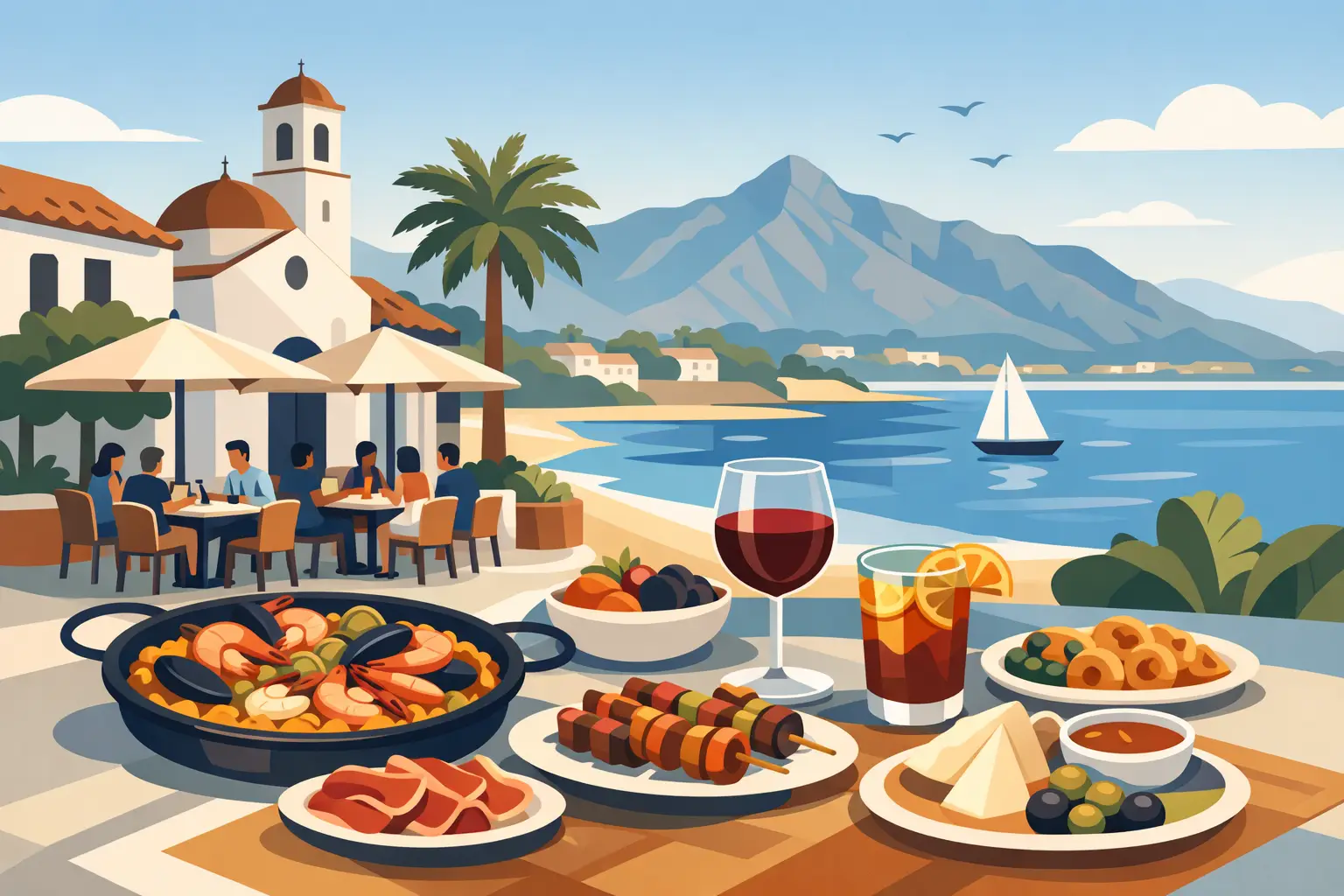
The best local food experiences rarely happen behind a laminated tourist menu. They happen standing at a market counter while someone slices jamon to order, in a narrow Old Town street where the waiter remembers who likes their vermouth dry, or around a small table where a simple plate of croquetas tells you more about a place than any monument ever could. If you want to understand Marbella properly, start with what people eat, how they eat it, and who they share it with.
Food here is not just a pleasure. It is memory, routine, pride, and conversation. A good meal in southern Spain is never only about the plate in front of you. It is also about the story behind the olive oil, the family who have run the tavern for decades, the rhythm of the market, and the habits that shape daily life. That is why travellers looking for something more meaningful than sightseeing often remember their meals more vividly than their museums.
What makes the best local food experiences feel authentic?
Authenticity is one of those words that gets used too easily. In practice, it usually means something simpler. You are eating where local people actually go, the dishes make sense for the region, and someone helps you understand what you are tasting instead of simply placing it on the table and walking away.
In Marbella, that often means leaving behind the polished sameness of the obvious tourist strips and spending time in places where the atmosphere has not been staged for visitors. A proper tavern should feel lived in. A market should feel useful before it feels picturesque. A tapas stop should have its own personality, not a menu designed to offend nobody.
There is also a trade-off worth mentioning. The most polished venue is not always the most local, and the most local venue is not always the easiest to navigate if you do not speak Spanish or know the customs. That is where context matters. The difference between a pleasant snack and a memorable experience is often the person guiding you through it.
Best local food experiences to look for in Marbella
Some experiences reveal more of the area than others. If your time is limited, it helps to choose the ones that bring together food, place, and story.
Tapas in the Old Town
If there is one experience that captures the social side of Andalusian eating, it is tapas done properly. Not rushed, not reduced to a checklist, and not treated like a novelty. The joy is in moving from one stop to another, tasting dishes with different roots and textures, and seeing how each venue has its own speciality and mood.
One bar may be known for a beautifully balanced ensaladilla rusa, another for freshly carved Iberian ham, another for a slow-cooked local dish that rarely appears on menus aimed at day-trippers. What matters is not the number of plates you collect, but whether each stop teaches you something about the area.
The Old Town is especially rewarding because the streets themselves carry so much history. Eating there is not just about finding a nice square for photographs. It is about understanding how food culture grew within old neighbourhood life – close-knit, sociable, and built on trusted local places.
A morning at the market
A market tour gives you a different kind of insight. Restaurants show you the finished result. Markets show you the foundation. You see what is in season, what locals buy for lunch, how fish is selected, why one olive is better for snacking and another for cooking, and how regional produce shapes everyday meals.
For travellers who enjoy asking questions, this can be one of the richest experiences available. You are not only tasting. You are learning how people shop, what ingredients define the local kitchen, and how tradition survives in daily habits.
Markets are also wonderfully honest places. They are not trying to perform for you. They are busy because people need ingredients, not because they want to entertain visitors. That honesty is part of their charm.
Wine, vermouth, and the art of pairing
The best local food experiences are rarely food alone. In Andalusia, what you drink is part of the conversation. A chilled glass of local wine, a carefully chosen sherry, or a classic vermouth can completely change how a dish opens up.
This is where local knowledge makes a visible difference. Without guidance, many visitors default to the safest option. With guidance, they start to see why a certain fortified wine suits salty almonds and cured meats, or why a fresh white works better with seafood than a heavier red ever could.
Pairing does not need to feel formal. In fact, it is usually better when it does not. The best pairings feel natural, rooted in habit and region rather than performance.
Why guided tastings often become the most memorable option
Independent travellers sometimes hesitate at the idea of a guided experience because they want freedom. That makes sense. Nobody wants to feel herded from place to place. But a well-led food tour is not about removing spontaneity. It is about replacing guesswork with access.
The real advantage is not simply that somebody knows where to go. It is that they know why it matters. They know which backstreet tavern still serves a dish in the old way, which market trader has the best seasonal produce, and how to read the small signals that separate a place locals respect from one that exists mainly for passing trade.
For English-speaking visitors, there is another benefit. Questions become easier. Menus become clearer. Cultural details that might otherwise pass unnoticed suddenly become part of the experience. You stop being a customer and become a participant.
That is especially true in smaller groups. Intimacy changes everything. You can hear the stories, ask about the ingredients, adapt for dietary needs, and enjoy the pace rather than feeling pushed along.
The best local food experiences depend on what kind of traveller you are
There is no single perfect food experience because people travel differently. Couples often want something romantic and relaxed, with enough structure to feel curated but enough informality to feel personal. Families may prefer variety, movement, and familiar flavours alongside a few surprises. Curious food lovers usually want the deeper story – not just what they are eating, but where it came from and why it still matters.
If you are the kind of traveller who loves context, choose an experience that brings history into the tasting. If you are more focused on flavour and atmosphere, a tapas evening may suit you better than a market morning. If you have dietary restrictions, local guidance becomes even more valuable because the best experiences are not always the easiest to arrange without help.
There is also the question of pace. Some visitors want a broad introduction. Others want a slower, more detailed journey through regional specialities. Neither approach is wrong. It simply depends on whether you want a first taste or a proper immersion.
How to spot a food experience worth your time
A memorable culinary experience usually has a few signs in common. It feels rooted in real local life. It balances tasting with storytelling. It is personal enough that you do not feel like part of a production line. And it leaves you with a stronger sense of place, not just a full stomach.
Be wary of anything that promises authenticity while sounding generic. The best experiences tend to be specific. They mention neighbourhoods, dishes, traditions, and the people behind them. They make room for conversation. They are confident enough not to oversell.
Good hospitality matters too. Warmth is not a small thing. In food travel, it is often the deciding factor between a decent outing and one you talk about for years.
A better way to taste Marbella
The real pleasure of eating well here is that it slows you down. You notice the tiled bar tops, the hum of afternoon conversation, the smell of grilled seafood drifting out of a kitchen, the way one bite of a traditional dish can connect you to generations of home cooking. These details are easy to miss when you are rushing from sight to sight.
Marbella rewards travellers who arrive curious. Not just hungry, but curious. Curious enough to ask why one cheese comes from the mountains and another from the coast. Curious enough to try a wine you cannot pronounce. Curious enough to follow a local recommendation down a street you might otherwise ignore.
That is where the best meals begin. Not with a search for the most famous table, but with a willingness to let the place introduce itself through flavour, habit, and human connection. If you give it that chance, Marbella does not simply feed you. It tells you who it is.