Blog
Meet Michel: Marbella’s Guide to Tapas Bars

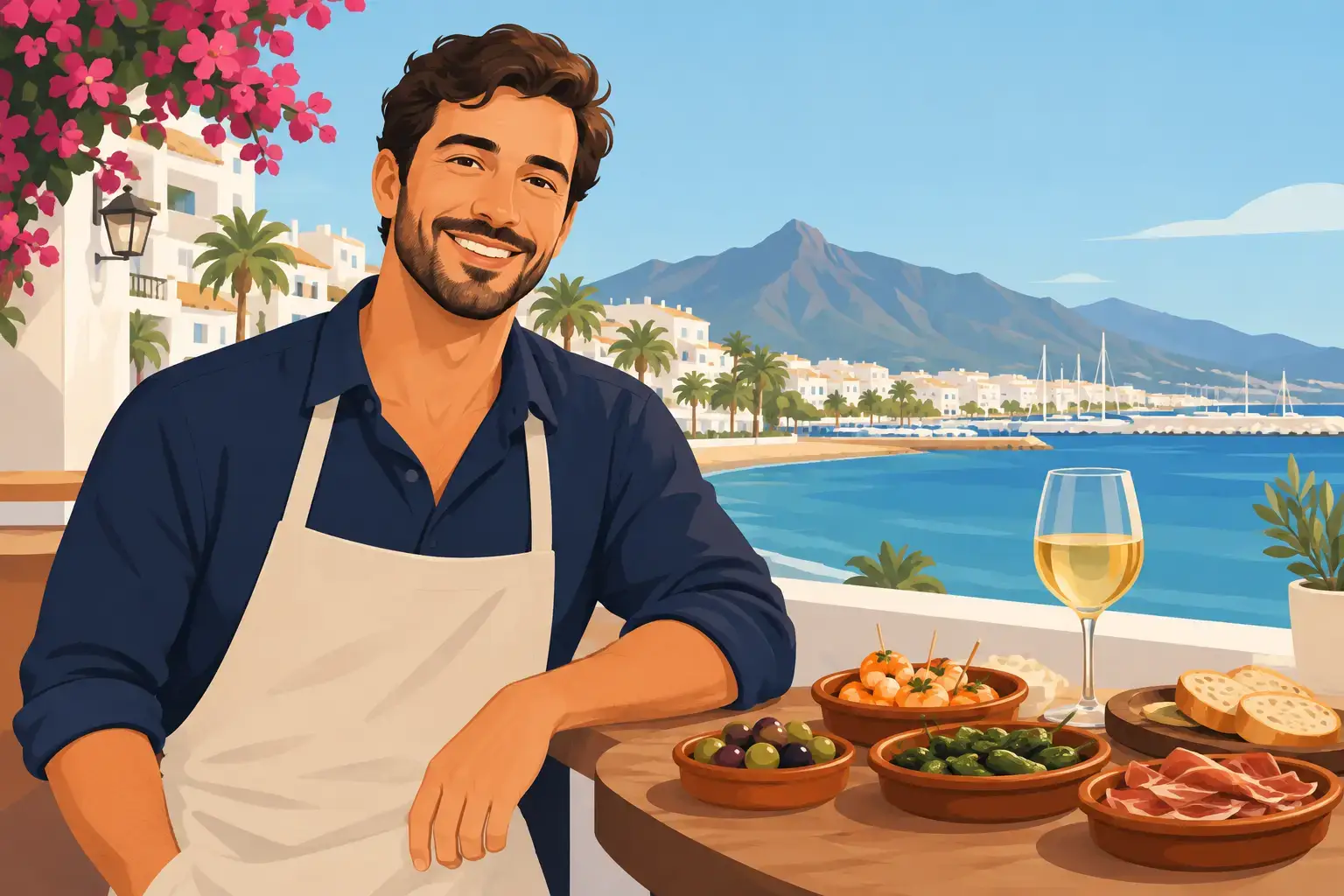
A great evening in Marbella should not begin with a screen full of ratings and a guess at which doorway to choose. It should begin with a glass being poured, a plate arriving at the table, and someone beside you who can tell you why that dish belongs there. That is what tapas bars mean to me: not simply somewhere to eat, but living rooms of Andalusian life, full of ritual, conversation and flavour.
My name is Michel Ende. I have worked in hospitality and catering for more than 35 years, and I have called Marbella home for over 20 of them. Long enough to see fashions come and go, to watch familiar family businesses change hands, and to understand that the most memorable meals are rarely about chasing the newest opening. They are about people, place and the small details you would otherwise walk straight past.
A Michel Marbella food tour begins with curiosity
I did not come to food tourism because I wanted to recite a list of ingredients. I came to it because food gives us a wonderfully honest way into a place. A slice of jamón can lead to a conversation about the dehesa. A bowl of gazpacho can explain the Andalusian summer better than any weather forecast. A modest-looking tavern can hold decades of family history behind its bar.
For many years, I worked as a head guide on food tours, leading visitors through the streets, courtyards and independent venues that give Marbella its character. Guests often arrived knowing the resort image of the coast, but left with a different picture: a historic town shaped by Moorish influence, fishing traditions, agricultural produce and a deeply social approach to eating.
That educational side has always mattered to me. A tasting is more enjoyable when you know the story in the glass, on the plate and in the room around you. My aim is never to turn dinner into a lecture. It is to make each stop feel more personal, more delicious and more connected to the town you have come to experience.
The stories behind the tapas bars
There is no single formula for a proper tapas bar. Some are bright and busy, with regulars standing at the counter and calling greetings across the room. Others are small, quieter and wonderfully old-fashioned, where the owner recognises a neighbour by their order before they sit down. Both can be authentic. The difference is whether the experience still feels rooted in the local rhythm rather than designed only for passing visitors.
On my tours, I choose stops for more than one good dish. Of course, the food has to be excellent. But I also look for the people serving it, the atmosphere at a particular hour, and a story that brings the flavour to life. Perhaps it is a local wine whose character changes beside cured meat. Perhaps it is a classic seafood tapa that makes sense once you understand Marbella’s relationship with the coast. Sometimes it is simply the generosity of a host who takes pride in explaining what is coming from the kitchen.
Andalusia is a region of strong culinary contrasts. Inland flavours can be earthy, rich and shaped by pork, olive oil, almonds and slow cooking. Closer to the sea, you find freshness, salt and the quiet confidence of excellent fish prepared with very little interference. Good tapas invite comparison. They encourage you to share, discuss and order one more small plate than you intended.
That is why I prefer a relaxed, guided pace. You need time to taste properly. You need time to notice the difference between a good olive and an exceptional one, to ask why a wine is poured in a certain way, or to hear how a street earned its name. Rushing from venue to venue may fill an itinerary, but it does not create a real memory.
More than a recommendation list
Visitors often ask me where the best places are, and it is a fair question. Yet a list of names cannot tell you what makes a venue special on a particular day. It cannot introduce you to a chef, explain a custom, or help you order with confidence when a menu is only the beginning of the conversation.
That is the value of being shown around by someone who has spent decades in the hospitality trade and more than 20 years living locally. I know when a place is at its best, how to balance familiar favourites with something new, and when to pause for the history behind a church façade, a square or a narrow old street. The food is the thread, but the evening is about the whole fabric of the town.
From Taste Marbella reviews to a direct experience
Some travellers find me before they arrive because they have read Taste Marbella reviews mentioning Michel by name. Those kind words mean a great deal to me. They came from guests who valued a tour with substance: proper food, genuine warmth, local knowledge and the feeling that they had spent time with a host rather than followed a script.
If you enjoyed the historic, deep-dive style of those earlier tours, you can now book me directly through Marbella Flavours for my 3.5-hour Tapas & Educational Tour. It is built for people who want more than a pleasant snack between sightseeing plans. We visit selected local venues, taste regional specialities, and make room for the stories that turn a holiday meal into an experience you will talk about long after you have returned home.
Small groups are important. They allow conversation to happen naturally and give everyone space to ask questions, whether you are fascinated by sherry, keen to understand Spanish ham, or simply want to know what local people eat when nobody is trying to impress a tourist. I can also accommodate dietary requirements with advance notice, because hospitality should feel generous, not restrictive.
Private tours offer another kind of freedom. They suit couples marking an occasion, families with different appetites, and groups who would like the route shaped around their interests. One party may want to focus on wine and charcuterie; another may be keen on market produce, seafood or the layers of history hidden in the old streets. The best route depends on the people walking it.
What makes the best tour guide in Marbella Old Town?
The phrase “best tour guide Marbella Old Town” is often typed into a search box by someone who is hoping to avoid a disappointing evening. I understand that. When time on holiday is limited, nobody wants a generic stop, a rushed explanation or food chosen because it is easy for a large crowd.
For me, a good guide has to do three things well. First, they must know their subject, not just the headline facts but the small cultural details that make a place breathe. Second, they must listen. A couple celebrating an anniversary does not need the same evening as a group of friends who want lively local energy. Third, they should make you feel comfortable from the first hello, particularly if Spanish food and customs are unfamiliar.
Knowledge without warmth can feel distant. Warmth without knowledge can feel superficial. The pleasure is in bringing both together. After 35 years in catering, I still enjoy the moment when a guest tastes something unexpected and their face changes. It might be a simple dish, but it has landed at the right time, in the right place, with its story attached.
Come hungry, leave with a sense of place
You do not need to be a food expert to enjoy a tapas tour. Curiosity is enough. Come ready to share dishes, to ask questions and to let the evening unfold at a local pace. Wear comfortable shoes for the old streets, bring an appetite, and leave a little room for surprise.
Marbella has glamorous sides that are easy to find. Its quieter culinary character asks for a little more attention. Give yourself the time to sit at the bar, listen to the room and taste what the region does best. That is often where the real Marbella begins.