Traditional Tapas Etiquette Explained by Michel

A crowded bar, a cool glass of wine, plates arriving as and when the kitchen is ready – this is where traditional tapas etiquette explained properly makes all the difference. There is no need to memorise a rigid rulebook. The real pleasure lies in understanding the relaxed, sociable rhythm of an Andalusian bar and joining it with curiosity, appetite and a little confidence.
I am Michel, and after more than 20 years living in Marbella, I still love watching visitors realise that tapas are not simply small portions of food. They are a way of spending time together. A dish of sizzling gambas al pil pil, a plate of jamón carved by hand, or a humble bowl of olives can carry a story about the people, produce and history of this part of Spain.
Tapas are meant to be shared
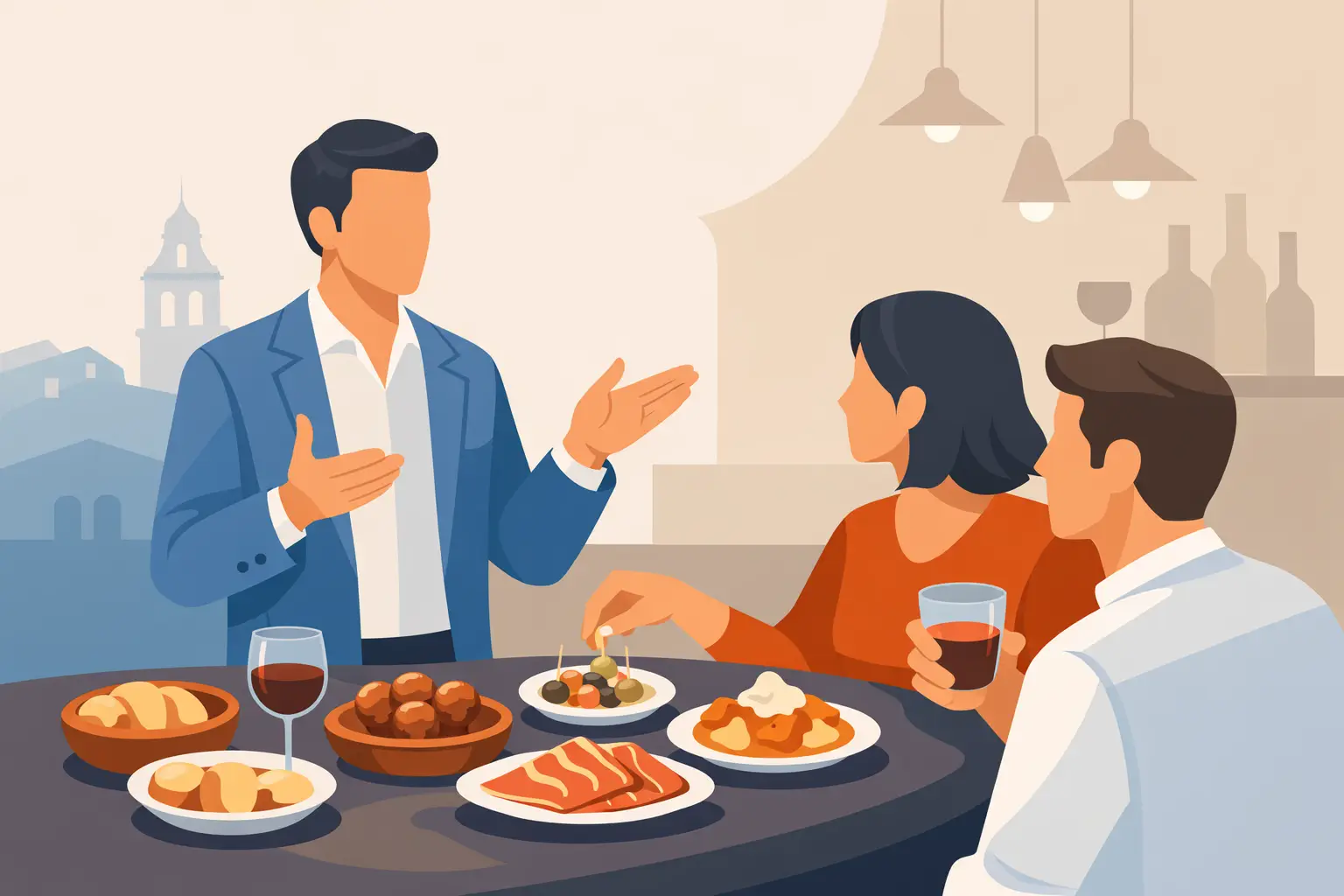
The first point of traditional tapas etiquette is also the easiest: tapas usually belong in the middle of the table. Rather than each person ordering a separate meal, the group chooses several dishes and shares them. It creates conversation naturally. One person reaches for a croqueta, another tears a little bread to catch the last of the sauce, and suddenly the table feels less like a restaurant booking and more like an evening among friends.
That does not mean every dish must be shared equally, bite for bite. If someone has ordered a personal portion, or if there is one last piece of tortilla that everyone is politely eyeing, a quick question is enough: “Shall we share this?” Good tapas manners are generous, not anxious.
Portion sizes vary greatly. A tapa may be a small snack, while a ración is a larger plate designed for the table. A media ración sits somewhere in between. The right choice depends on the size of your party, how hungry you are and whether you plan to visit more than one bar. On a proper tapas evening, it is often wiser to begin modestly and order again than to cover the table with food before the first drinks have settled.
The pace is part of the experience
Visitors sometimes expect every dish to arrive together, as it might in a conventional three-course meal. In a traditional bar, tapas often come out one by one, according to what is ready. Cold dishes may arrive first; grilled meat, fried fish or hot stews may follow later. This is normal, and it is part of the charm.
Eat the food while it is at its best. Hot croquetas should not wait for a photograph session that lasts ten minutes, and a plate of fried anchovies is at its finest moments after leaving the kitchen. Take your picture if you wish, then enjoy the dish while its texture and temperature are exactly as intended.
The pace is not a signal that service has been forgotten. It is an invitation to slow down. Have a sip, talk about what is on the plate, and let the evening unfold. In busy local bars, especially at Spanish dining times, patience is a small courtesy that is always appreciated.
Ordering with confidence, not volume
There is no prize for ordering the most elaborate dish on the menu. A memorable tapas meal may be built from simple things done beautifully: ripe tomatoes dressed with local olive oil, boquerones marinated in vinegar, a wedge of Spanish omelette, or pork cheeks cooked until tender.
A good approach is to order a few dishes first, balancing flavours and temperatures. Choose something cold, something fried or grilled, and perhaps one dish with a sauce for bread. If you are unfamiliar with an ingredient, ask. Most hosts and servers are delighted to explain a local speciality when they have a moment.
Be clear but relaxed when ordering. In a busy bar, knowing your first few choices before catching the server’s attention is helpful. Then leave room for recommendations. The best dish might be off-menu that day, based on what arrived fresh at the market that morning.
This is one reason I have always loved guiding visitors through the old streets and taverns. Food is never separate from the place. A dish may tell you about the fishing boats that supplied the coast, the Moorish influence on Andalusian cooking, or the family who have been making one recipe the same way for decades.
Traditional tapas etiquette explained at the table
Tapas are informal, but a few small habits help everyone enjoy the meal. Use the serving spoon or fork where one is provided, particularly for salads, olives and saucy dishes. Take a reasonable portion, then pass the plate along. Bread is perfect for gathering sauce, but it is best done discreetly rather than treating the shared plate as your own private bowl.
Toothpicks are common with certain tapas, especially pintxos-style bites, olives or small pieces of grilled food. Place used toothpicks on the side of your plate or in an empty dish, not back into the serving bowl. In some traditional establishments, the number of toothpicks left on the table may even help staff keep track of what has been ordered.
If you are standing at the bar, make space for others. Spanish bars are lively places, and a little awareness goes a long way. Keep bags close, avoid blocking the counter once you have been served, and do not mistake a busy room for poor hospitality. Often, the busiest bar is busy because the locals know exactly where to eat.
Drinks belong to the conversation
Wine, beer, sherry and vermouth are often part of a tapas occasion, but no one should feel obliged to drink alcohol. A sparkling water, a soft drink or a non-alcoholic beer is completely welcome. If you would like to try something local, ask for a suggestion that suits your food rather than automatically choosing the strongest option.
A chilled fino or manzanilla can be wonderful with olives, ham and seafood. A fresh white wine suits grilled fish, while a young red may be a lovely match for cured meats or richer stews. Still, the best pairing is the one you enjoy. Tapas etiquette is about sharing pleasure, not performing expertise.
When someone raises a glass, “salud” is the simple, natural toast. Make eye contact, smile and join in. It is a small gesture, but it captures the warmth that makes a tapas bar feel so different from a quick meal on the move.
Respect the local timetable
In Andalusia, lunch and dinner are often later than many British visitors expect. A bar may serve food throughout the afternoon, but the kitchen can become particularly lively after 8.30 pm, with dinner stretching comfortably into the night. If you arrive very early, you may find a quieter atmosphere and a shorter menu. Neither is wrong – it simply depends on the experience you want.
For a relaxed early evening, an aperitif and a few tapas can be ideal. For the full local buzz, dine later and accept that the bar may be busy, noisy and wonderfully animated. Families, friends and couples gather to talk as much as to eat. That hum of conversation is part of the menu.
A guide who knows the stories behind the plates
People searching for a “Michel Marbella food tour”, “Taste Marbella reviews Michel”, or the “best tour guide Marbella Old Town” are often looking for more than restaurant names. They want the historic, deep-dive style of food experience that turns a plate of food into a connection with a place.
For years, guests kindly mentioned me in their reviews after touring together. I am grateful for every one of those shared walks, questions, laughs and meals. Today, travellers who enjoyed that educational and personal approach can book directly with Marbella Flavours for a 3.5-hour tapas and cultural experience shaped by long-standing relationships with local hosts, chefs and vendors.
My background in catering spans more than 35 years, but the part I value most is the human side of hospitality. I want you to feel comfortable stepping into a traditional tavern, asking about an unfamiliar dish and understanding why a particular glass of wine is poured with pride. Dietary requirements can be accommodated with advance notice, because nobody should feel left out of the table’s conversation.
Let the bar teach you something
The finest tapas etiquette is not about getting every detail right. It is about arriving ready to share, taste and listen. Order a little at a time, let the hot dishes come when they come, and do not rush away from the stories that emerge between plates.
When you leave a good Andalusian bar, you should remember more than what you ate. You should remember the salt on the rim of a glass, the clatter from the kitchen, the person who explained a family recipe, and the feeling that for an hour or two, you were not merely passing through.