Blog
How to Read Spanish Restaurant Menus in Marbella

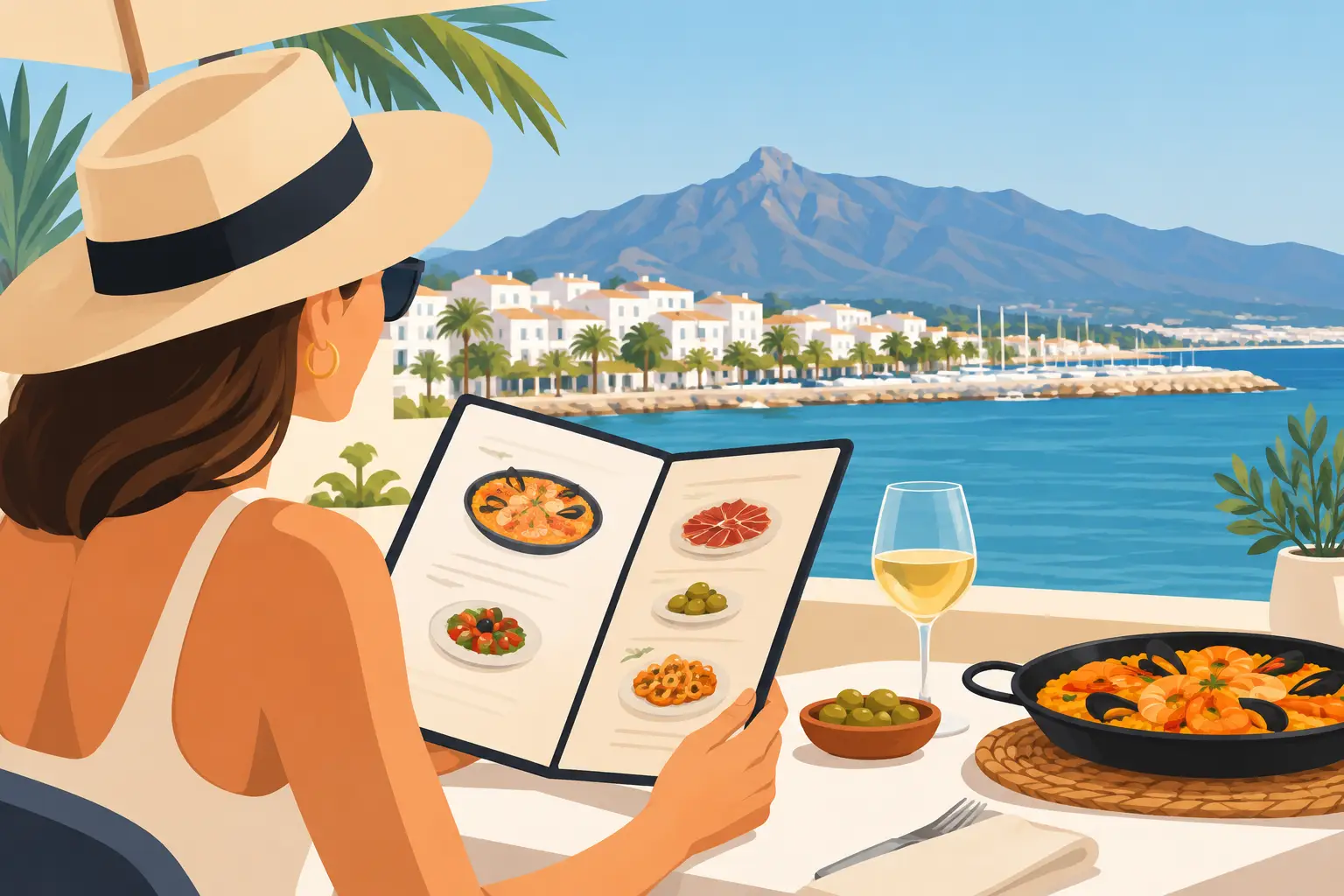
A menu lands on the table, full of words you recognise only partly: raciones, a la plancha, carrillada, chocos. You may know enough Spanish to order a coffee, but to read Spanish restaurant menus is to understand much more than a list of dishes. It is your first clue to the cooking style of the kitchen, the season, and whether you have found a place where local people genuinely eat.
I am Michel, and after more than 20 years living in Marbella and over 35 years in catering, I still enjoy opening a menu in a traditional tavern. Andalusian food is wonderfully direct, but its language carries history: fishing communities, mountain villages, Moorish influences, family recipes and the rhythm of the market. A few key words can turn an uncertain order into one of the best meals of your holiday.
Start with the shape of a Spanish menu
Many restaurants divide their menu by portion size rather than by starter, main and dessert. This is particularly true in tapas bars, where sharing is part of the pleasure.
A tapa is a small portion, often designed for one or two people to taste alongside a drink. A media ración is half a larger serving, while a ración is a full sharing plate. Sizes vary enormously. At one bar, a ración of croquettes may suit two people; at another, it may comfortably feed four. If you are unsure, ask: ¿Para cuántas personas es? – how many people is it for?
You may also see entrantes for starters, ensaladas for salads, carnes for meat, pescados for fish and postres for desserts. These headings are useful, but do not treat them as rules. A table of friends might share a tomato salad, grilled fish, a meat stew and several tapas in no particular order. That relaxed abundance is part of the Spanish way of eating.
Do not overlook the daily board
The most interesting food is often not printed on the main menu. Look for sugerencias, especialidades or fuera de carta. These mean suggestions, specialities or dishes not listed on the menu. They may be written on a chalkboard, recited by the waiter, or displayed near the bar.
This is where seasonality speaks. You might find wild mushrooms after rain, artichokes in winter, local tuna in spring, or fish brought in that morning. Ask what is particularly good today. A proud waiter or owner will usually be delighted to tell you.
The cooking words that make ordering easier
Once you can recognise a few preparation terms, Spanish menus become far less mysterious. They also help you choose dishes that suit your taste.
Frito means fried, often lightly floured and fried in olive oil. In Andalucía, pescadito frito can be a beautiful plate of small fish, crisp outside and delicate within. A la plancha means cooked on a hot griddle. It is a simple, clean preparation that works particularly well for prawns, squid, fish and vegetables.
Al horno is baked or roasted in the oven. A la brasa means grilled over coals or embers, so expect a smokier flavour. Guisado or en salsa suggests a stew or a dish served with sauce. These are often the comforting recipes worth seeking in traditional restaurants, especially when the weather is cooler.
Then there is al ajillo: cooked with garlic, often olive oil, parsley and sometimes chilli. En adobo means marinated, traditionally with spices, garlic and vinegar before cooking. If you spot adobo on a menu, it is usually a very Andalusian choice.
One word deserves attention: picante. It means spicy, but Spain’s idea of spice is often gentler than that of Britain, Mexico or Thailand. Still, ask if you are sensitive to chilli. A quick ¿Pica mucho? – is it very spicy? – will do the job.
Andalusian dishes worth recognising
Menus along the coast can be international, but a traditional restaurant will often offer dishes that tell you where you are. These are not merely items to tick off. Each has a place in the region’s food story.
Gazpacho is the famous chilled soup of tomato, pepper, cucumber, garlic, bread, olive oil and vinegar. It should taste fresh and balanced, not like a cold tomato sauce. Salmorejo, from nearby Córdoba, is thicker and creamier, usually finished with chopped hard-boiled egg and cured ham.
Croquetas are small fried croquettes with a soft béchamel centre. Ham is classic, but you may see varieties with mushroom, chicken, spinach, blue cheese or seafood. The best ones are crisp without being oily and soft enough inside to almost melt.
For seafood, look out for gambas al ajillo – prawns with garlic – and calamares, squid. Chocos are cuttlefish, usually meatier and more substantial than squid, while boquerones are anchovies. They may be fried, or served in vinegar as boquerones en vinagre. Both are worth trying, but they are very different dishes.
Berenjenas con miel are fried aubergines served with cane syrup, despite the menu often simply saying honey. The sweet-savoury contrast is a favourite across Andalucía. Flamenquín is a rolled, breaded and fried meat dish, usually pork with cured ham and sometimes cheese. It is hearty rather than refined, and ideal when you want honest comfort food.
If you see carrillada, do not be put off by the translation. It is cheek – usually pork or beef – slow-cooked until tender in a rich sauce. It is one of those dishes that rewards travellers who order beyond the familiar.
Fish names: ask before you guess
Fish can be the trickiest part of a menu because names change between regions, and literal translations are not always helpful. In a good local restaurant, staff should be happy to show you the fish or explain it.
Dorada is gilthead bream, a sweet, firm white fish often grilled whole. Lubina is sea bass. Merluza is hake, usually mild and flaky. Rodaballo is turbot, prized for its firm flesh. Atún rojo means bluefin tuna, which appears in many forms when in season: grilled, tartare, lightly seared or cured.
You may see fish priced por kilo – by the kilogram. This is common for larger fish and shellfish. Check the weight and final price before confirming your order, particularly if you are a couple looking for a lighter meal. It is not a trap, simply a traditional way of selling the day’s catch.
How to spot a menu with local character
A long menu is not automatically a bad menu, but it can be a warning sign when it offers pizza, burgers, curry, sushi and paella alongside dozens of unrelated dishes. A smaller menu that changes with the market often gives a kitchen more room to do a few things properly.
Look for seasonal specials, regional dishes and clear cooking styles. Pay attention to whether the menu mentions origin, such as local goat’s cheese, Iberian pork, Almadraba tuna or vegetables from nearby farms. These details suggest that ingredients matter to the kitchen.
That said, the best choice depends on the moment. A beachside lunch may call for grilled sardines and a cold beer. An evening in the old streets may be better suited to a slow-cooked stew, a glass of Málaga wine and a few plates to share. There is no need to chase the most unusual item every time. Order what appeals, but let the menu gently guide you towards the region.
Useful Spanish phrases at the table
You do not need perfect Spanish to eat well. A friendly opening and a few straightforward questions go a long way. You can say, ¿Qué me recomienda? – what do you recommend? – or ¿Cuál es el plato más típico? – which is the most typical dish?
For dietary needs, be clear and direct. Soy vegetariano/a means I am vegetarian. No puedo comer gluten means I cannot eat gluten. ¿Lleva frutos secos? asks whether a dish contains nuts. Do not rely on a dish sounding safe from its name alone, particularly with sauces, fried foods and desserts.
And if you are not sure how something arrives, ask: ¿Cómo se sirve? A little curiosity often leads to a better explanation, a useful recommendation and sometimes a dish you would never have chosen yourself.
Let the menu tell you a story
Reading a Spanish menu is not about translating every word before you order. It is about noticing clues: the catch of the day, the old recipe tucked between familiar tapas, the produce that has travelled only a short distance to the kitchen. Those clues bring you closer to the place you came to experience.
For travellers who enjoy that deeper story, my small-group Marbella Flavours food experiences bring the menu to life through the taverns, people and traditions behind each plate. But even if you are simply choosing supper for tonight, take your time, ask one good question and order something with a name you have never tried before. That is often where the real flavour of Andalucía begins.