Blog
Traditional Spanish Breakfast Dishes to Try

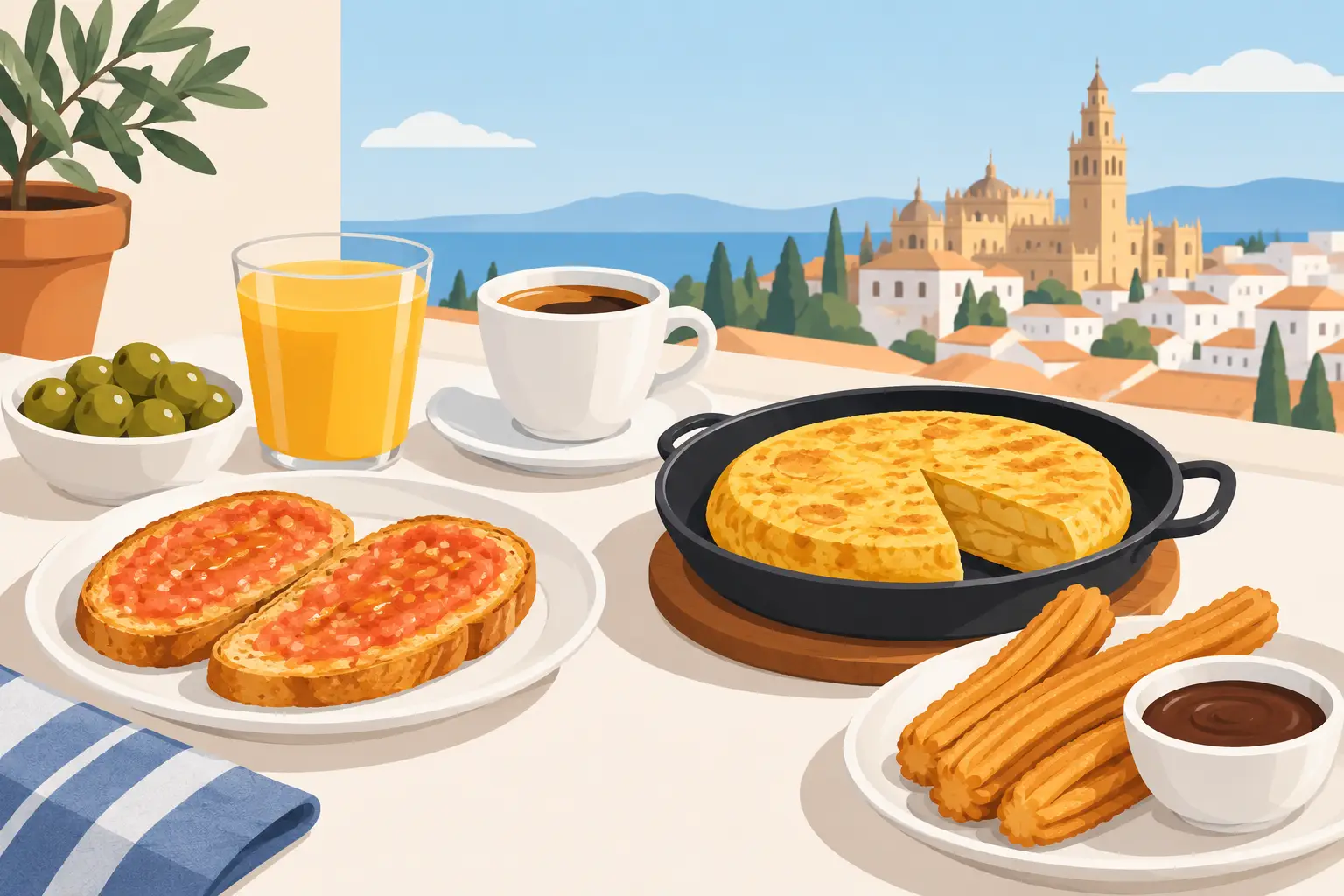
A Spanish breakfast rarely arrives piled high on a plate. It is more likely to begin at a bar counter with the hiss of a coffee machine, a glass of freshly pressed orange juice and warm bread being sliced for the toaster. For visitors expecting a full cooked breakfast, the first morning can be a surprise. But traditional Spanish breakfast dishes have their own quiet pleasure: excellent olive oil, ripe tomato, cured ham and the unhurried rhythm of a neighbourhood café.
In Marbella, breakfast is not simply fuel before the beach or a walk around the Old Town. It is a small daily ritual. Locals stop for a quick coffee before work, meet friends over toast, or linger over churros on a slow weekend morning. The ingredients can look modest, but their quality tells a great deal about Andalusian food culture.
What makes a traditional Spanish breakfast?
Breakfast in Spain is generally lighter and later than many British travellers expect. A coffee and something sweet might be enough first thing, followed by a more substantial mid-morning bite. There is no single national breakfast plate, either. What you eat depends on the region, the season and whether you are grabbing something on the way to work or settling in for a Sunday treat.
In Andalusia, bread is the centre of the table. Good tostada is served with a choice of toppings: tomato, olive oil, butter, jam, ham or soft cheese. It is simple food, but never careless food. When the bread is fresh, the oil is peppery and the tomatoes taste of sunshine, there is nothing plain about it.
Tostada con tomate y aceite de oliva
If you order one breakfast dish in southern Spain, make it tostada con tomate y aceite de oliva. A thick slice of toasted bread is topped with crushed or grated tomato, a generous pour of extra-virgin olive oil and often a pinch of salt. Some cafés bring the ingredients separately, allowing you to build it exactly as you like.
The pleasure lies in balance. The toast should have a crisp edge but remain soft within. The tomato needs freshness rather than sweetness alone, while the olive oil adds a grassy, gently bitter finish. It is a perfect introduction to a region where olive groves shape both the landscape and the kitchen.
For a more filling version, add jamón serrano. The salty cured ham gives the dish depth without turning it into a heavy meal. Vegetarians can simply stay with tomato and oil, or choose cheese, avocado or a tortilla portion, depending on the café.
Pan con aceite
Even more elemental is pan con aceite – bread with olive oil. It may arrive with oil already poured over the toast or with a little bottle on the table. In the best places, this is a chance to taste the character of local oil clearly: green, fragrant and sometimes pleasantly peppery at the back of the throat.
Visitors sometimes overlook it because it sounds too basic. That would be a mistake. Andalusian cooking has always known that a few excellent ingredients need very little interference. Ask for tomato alongside it if you want extra brightness, or a little salt to sharpen the flavour.
Sweet traditional Spanish breakfast dishes
Spain has a strong sweet-breakfast tradition, especially when coffee is involved. These dishes are best enjoyed as locals do: with restraint, good company and a properly made coffee rather than as an enormous dessert before noon.
Churros con chocolate
Churros are perhaps Spain’s most recognisable breakfast treat, although they are not an everyday choice for everyone. Freshly fried lengths of dough are served warm, usually with a cup of thick hot chocolate for dipping. The chocolate is richer and denser than drinking chocolate, closer to a warm sauce.
In Andalusia, you may also see porras. They are thicker than classic churros, softer in the middle and often cut into portions. Both are at their best eaten immediately, while the outside is crisp and the centre is still tender.
A small warning for first-time visitors: a portion can be more generous than expected. Sharing is often the sensible option, especially if lunch plans include tapas. Churros are a joyful part of the experience, but Spain offers plenty of lighter morning choices too.
Tostada con mantequilla y mermelada
Toast with butter and jam may sound familiar, yet it belongs on the Spanish breakfast table for a reason. The difference is often in the bread and in the pace. A café tostada is cut from a rustic loaf, toasted to order and served with small packets of butter and marmalade or jam.
It is especially popular with children and with anyone who wants something uncomplicated alongside coffee. Do not underestimate the value of this choice after a late Spanish dinner. A simple breakfast can be exactly right.
Magdalenas and other pastries
Magdalenas are small, light sponge cakes, usually flavoured with lemon and olive oil. They are less buttery and dense than a muffin, with a delicate, slightly domed top. Dip one into café con leche and you will understand why they remain a favourite in homes and traditional cafés.
You may also find napolitanas filled with chocolate or cream, ensaimadas from Mallorca, and regional biscuits behind the counter. These are lovely occasionally, but the freshest bakery item is not always the most traditional Andalusian choice. If authenticity matters to you, look for places where regulars are ordering their morning coffee and toast rather than cafés designed solely for passing visitors.
Savoury options worth ordering
Although toast dominates, there are other dishes that make a satisfying late breakfast. A Spanish tortilla, made with eggs and potato, is often available as a slice at the bar. It should be tender, well seasoned and not overloaded with onion unless that is the house style. Whether onion belongs in tortilla is a friendly national debate, so there is no universally correct answer.
Bocadillos are another useful choice. These filled baguette sandwiches can contain tortilla, cheese, tuna, ham or loin of pork. They are more of a mid-morning snack than a formal breakfast, yet they suit travellers heading out for a day of exploring.
In some places, especially near the coast, you may spot a small montadito – a compact bread roll with a savoury filling. It is worth trying if you want something more substantial than tostada without committing to a full meal.
The coffee order matters
Breakfast is also about knowing how to order coffee. A café con leche is the easy choice for many visitors: espresso with hot milk, served in a glass or cup. If you want less milk, ask for a cortado. A solo is a straight espresso, while an americano is espresso with hot water.
Andalusia has its own wonderfully precise coffee vocabulary, particularly around Málaga. You may hear locals ask for a nube, sombra or mitad, terms that refer to the ratio of coffee to milk. The exact naming can vary between establishments, so there is no need to perform local expertise. A friendly question to the server is always better than guessing.
Fresh orange juice, or zumo de naranja natural, is the classic companion. When oranges are in season, it is bright, sharp and far more refreshing than bottled juice. Add sparkling water if the morning is already warm.
How to eat breakfast like a local in Marbella
The most memorable breakfast is usually not found by chasing a long menu. Choose a busy, independent café, ideally one where you can hear Spanish being ordered around you. Sit outside if the weather permits, watch the neighbourhood wake up and begin with tostada con tomate y aceite, a café con leche and orange juice.
Timing helps. Early cafés serve workers and school-run parents; later in the morning, the crowd shifts towards friends catching up and visitors enjoying a slower start. At weekends, churros become more tempting and tables can fill quickly. There is no need to rush, but there is also no expectation that breakfast must last for hours.
Michel, founder of Marbella Flavours, has spent more than two decades living locally and knows that the smallest food moments often reveal the most. A great breakfast tells you where the olive oil comes from, how a café treats its bread and whether its regulars trust the person behind the counter. Those details are the beginning of understanding Andalusian cuisine, not an afterthought.
A few helpful ordering phrases
You do not need fluent Spanish to enjoy breakfast, but a few words make the encounter warmer. Ask for “una tostada con tomate y aceite” for tomato and olive-oil toast, or “con jamón” if you would like ham. “Café con leche” is coffee with milk, while “zumo de naranja natural” asks for fresh orange juice.
If you have dietary requirements, say so clearly. “Sin gluten” means gluten-free, “sin leche” means without milk and “vegetariano” is widely understood. Cross-contamination can be difficult in small kitchens, particularly around bread and fried foods, so explain the seriousness of an allergy rather than assuming a dish is safe.
The best approach to traditional Spanish breakfast dishes is to order simply, choose quality and stay curious. Let the toast arrive hot, drizzle the oil without hesitation and take a moment before the day begins. A good breakfast in Marbella does not need to impress with quantity – it wins you over with the flavour of a place that knows how to make ordinary ingredients feel special.